

Specialty coffee shop
The Confidentiality Shield: Selling a UK Hospitality Business Off-Market
Discover how selling your UK business off-market protects staff morale, secures premium valuations, and ensures total confidentiality through pre-vetted buyer matching.
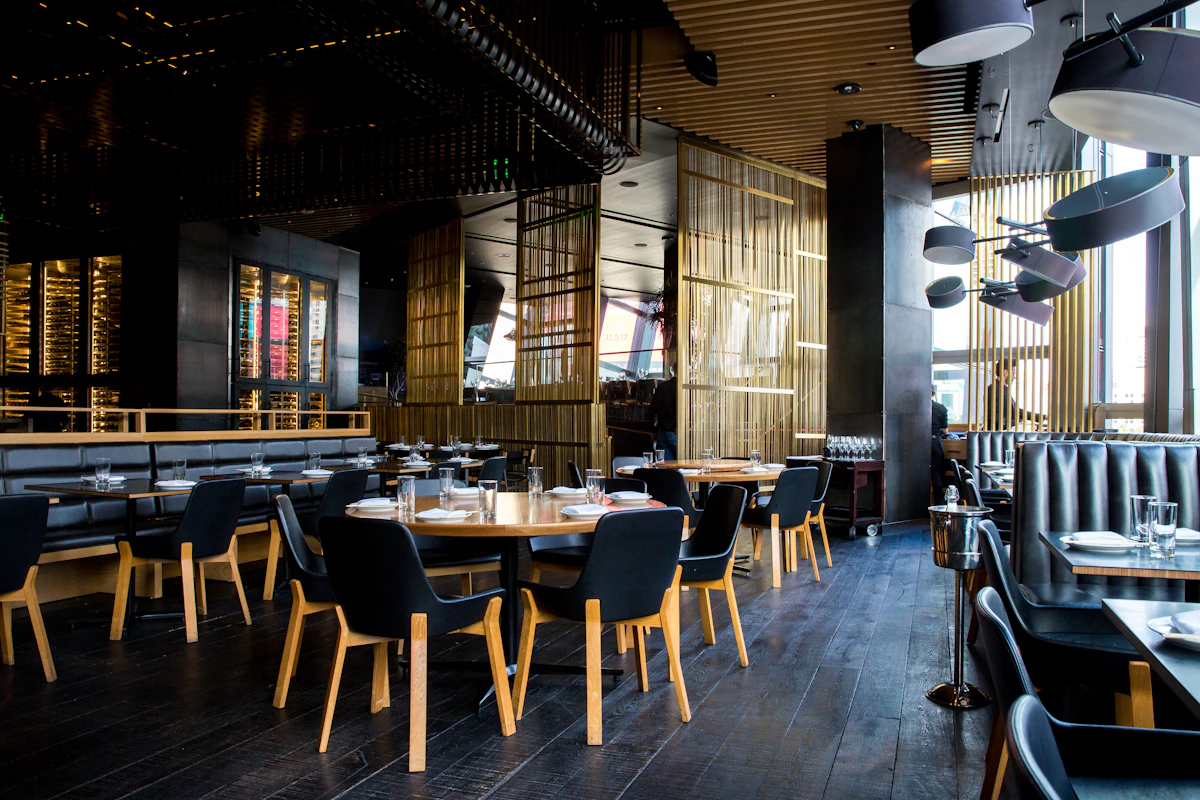
Hero photograph caption: A private sale protects the daily craft, staff, suppliers and regulars never see the process.
- Selling privately prevents staff resignations, supplier anxiety, and loyal customer churn by keeping operations perfectly stable.
- The off-market method replaces public adverts with anonymised teasers and heavily restricted Information Memorandums gated by legal NDAs.
- Rigorous financial vetting eliminates speculative time-wasters, ensuring you only negotiate with serious parties boasting verified proof of funds.
- Private sales routinely achieve higher completion valuations by maintaining operational momentum and creating a highly competitive, exclusive buyer environment.
The Critical Need for Total Discretion
Selling an established café, coffee shop or bakery is not like selling a house. If you put a sale board above the door of your business, the fallout can be immediate and damaging. Selling your hospitality business quietly, known as an off-market sale, is the safest way to protect the value you have built over the years. It prevents panic among your staff, your suppliers and your loyal customers.
Every successful independent café relies on trust and daily routine. The moment public knowledge surfaces regarding a potential change of ownership, that stability is threatened. High-performing front-of-house staff, experienced baristas and reliable kitchen managers often start looking for alternative employment. They understandably fear redundancies or unwanted changes under an unknown new owner. Losing your best staff right before you try to sell is disastrous for your valuation, as a buyer is essentially purchasing the reliable team you have put in place.
The operational risks of a public sale stretch far beyond the immediate payroll. Wholesale suppliers, such as local coffee roasters or regional bakeries who currently grant you favourable thirty-day credit terms, often change their stance. Upon spotting a public listing online, they might demand immediate cash on delivery to protect their own accounts. Additionally, commercial landlords monitor the open market closely. If they realise you are highly motivated to assign your current lease (legally transferring it to a new tenant) and exit the premises, they suddenly gain a significant negotiating advantage. They might demand higher rent deposits or unfavourable maintenance terms from the incoming buyer, which fundamentally delays and complicates your legal handover.
Local customers are also highly sensitive to changes in their favourite community spaces. A highly visible sale sign acts as an immediate visual deterrent. Regular patrons start scrutinising every cup of coffee and every minor delay in service, mistakenly attributing standard daily challenges to the impending sale of the business. An off-market exit completely removes these structural risks by keeping your intentions entirely invisible to the general public. You maintain absolute day-to-day stability right up to the final day of completion, which is the day the money changes hands and the keys are handed over to the new operator.
The key takeaway is that strict confidentiality actively protects your ongoing daily revenue, which in turn defends the final sale price of your enterprise. By exploring exactly how private transactions replace damaging public exposure with systematic buyer qualification, UK owners can execute highly profitable exits entirely under the radar. Keeping your commercial intentions private is not just a preference; it is a vital defensive tactic required to safeguard the equity you have built.
The Core Concept and Private Gallery Analogy
The off-market sale process functions exactly like an exclusive private gallery viewing. It systematically strips out public speculators to focus exclusively on financially verified commercial investors and serious local buyers. Instead of broadcasting your business details across standard online business-for-sale portals, you invite pre-vetted buyers to view a restricted financial prospectus under strict legal conditions.
The Private Gallery Principle
Imagine attempting to sell an incredibly rare, highly valuable piece of original artwork. If you choose to place it on a busy pavement with an attached price tag, you will inevitably attract thousands of curious onlookers, relentless time-wasters and perhaps a handful of opportunistic bargain hunters looking to negotiate heavily. Conversely, if you position that exact same artwork inside a secure private gallery requiring an advance appointment, professional credentials and a verified bank statement just to step through the door, you instantly change the psychology of the purchase. The asset suddenly carries an aura of exclusivity, desirability and high intrinsic value.
Selling a hospitality business operates on this precise commercial principle. A public listing on standard commercial broker websites loudly broadcasts that a café is available to absolutely anyone. This mass visibility occasionally implies an underlying urgency or a distressed situation where the owner simply has to get out. However, a discreet private approach signals confidence, structural stability and a highly selective transfer process. Serious business buyers invariably respond better to controlled scarcity.
Mechanics of the Confidential Engine
This highly targeted process starts with the creation of an anonymised teaser campaign. This specific document is a highly condensed one-page summary highlighting your primary financial figures, broad geographical location data and general growth opportunities. For example, it might mention an affluent Surrey commuter belt rather than a specific high street. Crucially, this preliminary teaser entirely omits your specific trading name, your precise street address and any identifying photographs of your shop front. Interested parties review this blind profile. If it matches what they are looking for financially, they must proceed to the legal stage before they find out exactly which café is for sale.
To progress further, the prospective buyer must sign a Non-Disclosure Agreement (commonly known as an NDA). An NDA is a legally binding UK contract expressly forbidding the buyer from sharing your private trade information, discussing the sale with unauthorised parties or directly approaching your staff members. In tandem with this confidentiality agreement, an experienced broker will demand clear proof of funds. This requirement forces the buyer to produce certified bank statements or formal letters from a regulated accountant demonstrating their absolute ability to finance the purchase price.
Once this double lock of legal protection and financial verification is successfully cleared, the broker releases the comprehensive Information Memorandum (IM). The IM is a detailed business prospectus containing precise annual turnover figures, an explanation of your lease obligations, your staffing structure and your full brand identity. The primary rule here is to restrict access heavily. Profound commercial information is a distinct privilege earned through absolute financial transparency, not an automatic right granted by simply clicking on an online advert.
Curious about the value of your business?
Protect your operational momentum and discover what your hospitality business is truly worth in the private market. Our straightforward process helps you understand your options without alerting your staff or local competitors.
Practical Action Blueprint and Case Study
Executing a completely quiet sale requires absolute communication discipline, rigorous structural preparation and meticulously planned out-of-hours commercial viewings. To understand exactly how this translates into a practical reality for a busy small business owner, we can examine a highly successful recent exit facilitated entirely off-market.
Sarah previously operated an exceptionally profitable artisan deli and bakery café positioned on a bustling high street in Surrey. She had run the business for fourteen years. Her entire business model relied heavily on a trusted local manager and a highly sensitive network of speciality regional suppliers. Realising that a public sale board would immediately trigger staff resignations and disrupt her carefully negotiated supplier accounts, she decided on a dedicated off-market approach to facilitate a quiet, completely invisible exit over a five-month period.
The Five-Stage Blueprint for Discretion
The first stage was defining the commercial narrative and compiling the raw data entirely in private. Sarah independently gathered three continuous years of profit and loss accounts, a copy of her current commercial lease agreement and a full list of her physical assets, from the commercial espresso machine to the display fridges. She accomplished this entirely without discussing her long-term plans with any staff members. She worked discreetly alongside her external accountant to normalise her trading figures. Normalising accounts simply means adjusting your official tax return figures to show the true underlying cash profit of the business. This often involves adding back one-off expenses or personal director costs that a new owner would not necessarily incur, giving buyers a clear picture of the true earning potential.
The second stage involved establishing the anonymised external profile. A blind commercial teaser was drafted, highlighting a premium artisan deli generating £450,000 in annual turnover, operating with a very healthy gross profit margin. This highly sanitised document was circulated strictly via direct, private communication to a curated, pre-existing database of registered UK hospitality buyers who had previously demonstrated active intent and financial ability.
The third phase centred entirely on intensive qualification and legal gating. When targeted enquiries invariably arrived, rigorous and immediate proof of funding was requested. Prospective buyers were required to demonstrate readily available liquid capital capable of covering both the asking price and any associated legal assignment fees for the lease. Only after this financial capability was proven were strict confidentiality contracts drafted, physically signed and processed before the full Information Memorandum was released to the validated shortlist of buyers.
The fourth stage required perfectly orchestrating the physical location viewings. Sarah hosted these highly motivated buyers exclusively on Sunday evenings or extremely early on Monday mornings, completely circumventing the standard daytime staff arrivals. Prospective buyers were rigidly instructed to act merely as standard retail customers if they decided to visit the deli anonymously during peak daytime trading hours. They were explicitly forbidden from asking probing operational questions or attempting to speak privately to the management team, under threat of immediate legal disqualification from the ongoing sale process.
| Sale Phase | Timeframe | Owner Challenge | Off-Market Outcome |
|---|---|---|---|
| 1. Preparation & Valuation | Weeks 1 to 3 | Gathering precise lease and profit data without alerting the internal management team. | A comprehensively normalised data room securely established via external software platforms. |
| 2. Anonymised Marketing | Weeks 4 to 6 | Generating genuine buyer interest without exposing the specific brand identity publicly. | Engaged four highly motivated, verified buying groups through restricted teaser profiles. |
| 3. Vetting & Due Diligence | Weeks 7 to 12 | Filtering out time-wasters and protecting deeply sensitive historic tax records. | Signed non-disclosure agreements and formal proof of funds secured before sharing the IM. |
| 4. Controlled Site Viewings | Weeks 13 to 16 | Allowing buyers to inspect the physical premises without staff noticing the activity. | Viewings effectively condensed exclusively into early morning and late Sunday evening slots. |
| 5. Legal Handover | Weeks 17 to 20 | Managing the commercial landlord agreement without revealing earlier desperation. | Smooth structural transition resulting in the full valuation paid upon completion. |
This entire structured process successfully concluded in month five. The sale formally completed in absolute quiet. The new buyer was introduced professionally to the deli staff as a fresh investing partner on a late Sunday afternoon, ensuring an incredibly smooth transition for Monday morning service. By rigorously following this exact confidential blueprint, Sarah actively protected her strong monthly revenue and officially secured a premium valuation entirely outside the damaging glare of the public eye.
Protecting Value and Valuation Impact
Off-market marketing actively preserves your core business valuation by completely eliminating the damaging perception of distress and safeguarding your essential operational revenue. A public property listing that continually lingers online for nine or twelve months essentially gathers digital dust. This unconsciously signals desperation to highly predatory buyers looking to make aggressively lowered offers.
When a hospitality business sits prominently on an open property portal for an extended period, local competitors and professional buyers naturally begin to wonder what underlying faults are preventing a successful sale. They might assume the lease is too short, the equipment is failing or the local footfall is dropping. This unhelpful visibility dramatically erodes your negotiating position. It gives the incoming buyer the psychological upper hand to submit lower offers based purely on a presumed urgency to exit. The confidential off-market strategy flips this commercial dynamic entirely. By keeping the legal sale strictly private, you systematically create a highly controlled environment where the specific business appears profoundly sought after and inherently exclusive, encouraging serious buyers to step forward decisively.
Additionally, maintaining strict commercial secrecy practically guarantees that your underlying valuation drivers remain firmly intact throughout the stressful negotiation period. The actual financial value of an independent commercial coffee shop, bakery or café resides strictly in its consistent core customer base and the reliable, repeatable daily performance of its fully trained staff. If a clumsy public listing actively causes your dedicated head barista or experienced general manager to resign abruptly in search of early job security, local customers will immediately notice a corresponding drop in product quality and service speed. They will quickly take their lucrative morning trade elsewhere.
A sudden numerical drop in average weekly takings halfway through an active sale process gifts the buyer immediate verifiable grounds to radically renegotiate the ultimate purchase price downwards. The valuation of a hospitality business is generally calculated using a multiple applied to your adjusted net profit, often referred to as EBITDA (Earnings Before Interest, Taxes, Depreciation and Amortisation) or SDE (Seller's Discretionary Earnings). Essentially, this is your core operating cash profit. Because businesses are valued on a multiple of this profit, a sudden reduction in daily revenue causes an exponentially larger reduction in your final completion value. The dedicated off-market method ensures this disastrous scenario never successfully materialises. Operational confidentiality is a vital defensive mechanism required to preserve the actual commercial worth of your active enterprise.
The Realities of Due Diligence and Landlord Negotiations
Managing the highly sensitive dynamics of a quiet transition involves mastering tenant relationships, operational legalities and stringent communication protocols. Once you have found the right buyer through an off-market process, the two parties will typically agree to Heads of Terms. This is a preliminary document outlining the fundamental points of the proposed sale, such as the agreed price, the target completion date and the basic structure of the handover. While usually not legally binding in its entirety, it sets the professional framework for the detailed legal work to follow.
A major hurdle in selling a fixed-premises hospitality business is managing your commercial landlord. To sell your café, you normally need to assign your existing lease to the new buyer. Landlords have a legal right to vet the incoming tenant to ensure they are financially stable and capable of paying the rent. During a confidential sale, approaching the landlord must be timed perfectly. If you inform them too early, news might leak locally. If you leave it too late, the legal checks and requests for rent deposits can critically delay completion. An experienced broker will help you time this approach exactly right, usually after the buyer's proof of funds has been fully verified and the Heads of Terms are signed.
During this period, the buyer will also conduct their detailed due diligence. This is the period where a buyer and their solicitor rigorously check your accounts, lease and legal history to ensure everything you have claimed is entirely accurate. Because you are operating off-market, this process must be handled with immense care. You will need to provide detailed staff contracts, payroll histories, supplier agreements and equipment maintenance records to the buyer's solicitor. Gathering this information quietly is a task that falls squarely on the owner. You must have your paperwork impeccably organised before you even begin the sale process. Tidy accounts, clear staff records and a well-maintained premises lease tell a buyer that your business is a safe, reliable investment. Messy records only create doubt, and doubt always leads to a lower offer or a collapsed sale.
Secure Your Sale on Your Own Terms
Securing the most profitable commercial exit on your own terms begins strictly with understanding the true, highly defensible value of your operating business within a private sale framework. By completely shielding your current staff, your suppliers and your regular loyal customers from dangerous public uncertainty, you effectively preserve the operational equity you have diligently built over many years.
When you have spent decades waking up early to open the doors, managing weekend rotas, fixing broken espresso machines and building a fiercely loyal local following, you deserve an exit that respects your hard work. Selling an established café or tea room is a significant life event, often funding a well-earned retirement or a complete change of location. Getting the process right is fundamentally important. It requires patience, meticulous preparation and a completely honest assessment of what your business is worth in the current market.
BuyMyCafe.co.uk routinely acts as the definitive commercial authority for UK hospitality owners independently seeking a structured, financially secure and completely confidential sale process. Whether you are tentatively exploring an initial operational exit strategy or actively preparing your legal documentation to hand over the physical keys to a completely new operator, our experienced advisors can guide you through every subtle stage. We ensure your private intentions are never exposed to the general high street.
If you are an owner considering your options, we invite you to have a completely confidential conversation with our team. We can explain exactly how the market is performing in your specific area and help you understand the realistic value of your premises. For buyers looking for established, viable hospitality opportunities, registering your specific requirements allows us to present you with secure, off-market businesses before they are ever widely discussed. You can get in touch with our team to start the conversation, or register your buyer requirements today.
Frequently asked questions
Common UK buyer questions on this topic.
Related guides
Hand-picked pillar reads on adjacent topics and sectors.


Explore related sectors
Sector deep-dives covering valuation multiples, buyer demand and listings.
Brand-led third-wave operators where reputation, espresso kit and barista talent command premium SDE multiples.
Unbranded high-street and parade cafés trading on regulars, fry-ups and consistent weekly takings.
High-margin rural tea rooms and tourist-trail destinations, frequently sold freehold to lifestyle buyers.
High-footfall city-centre food-to-go operations where weekday takings and corporate catering accounts set the price.