
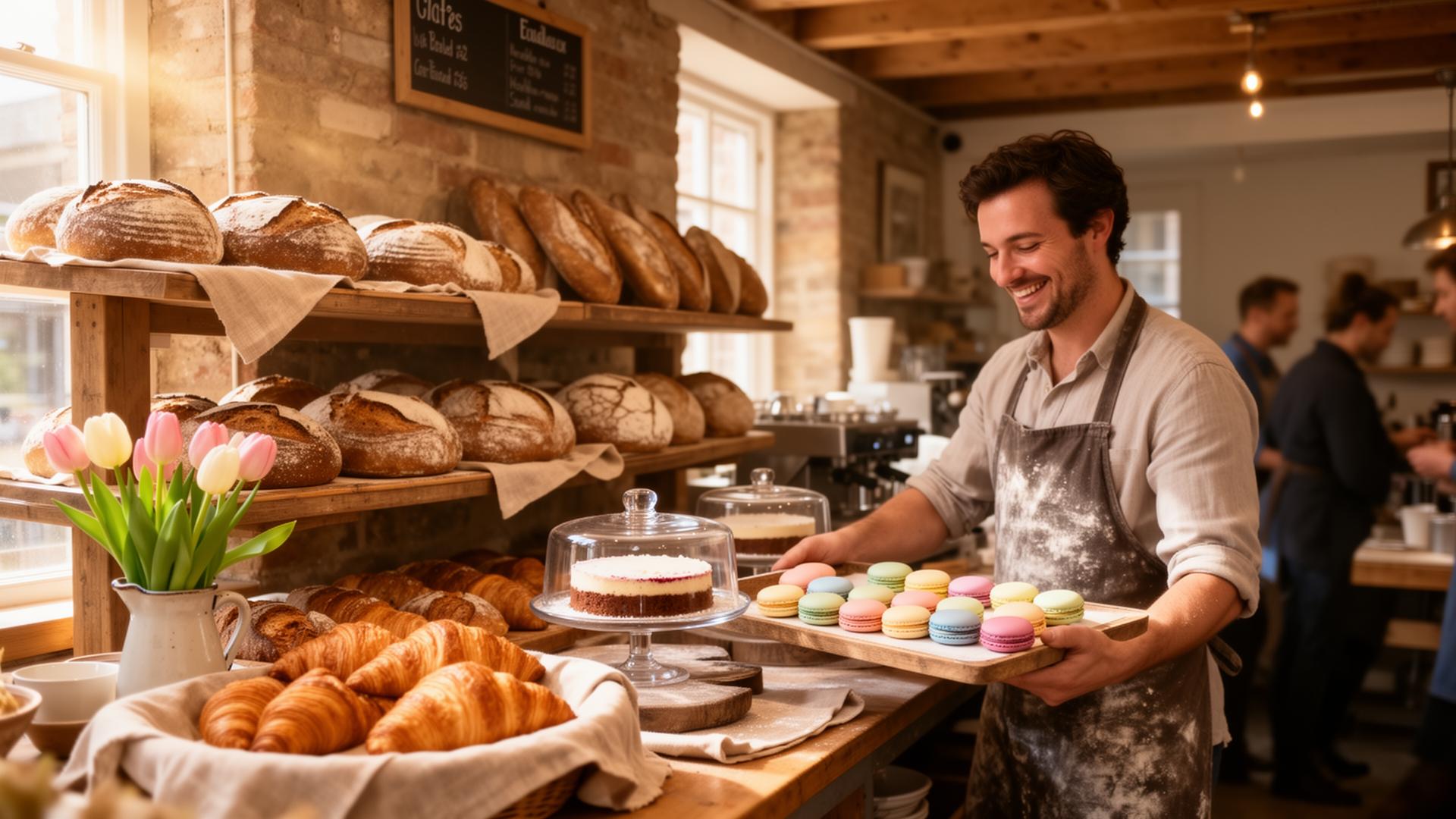
Smiling artisan baker in a flour-dusted apron arranging fresh sourdough loaves, golden croissants and pastel macarons inside a warm independent UK bakery café

For café and hospitality business owners

Selling your café or coffee shop

If you own an established café, coffee shop, bakery, tea room, sandwich shop or deli and you are starting to think about selling, this page explains how it works: what your business is likely to be worth, what buyers look at, how long it takes and how we keep it quiet from your staff, landlord and competitors until you are ready.

Your first conversation is free, private and puts you under no obligation. Nothing is advertised, and nothing is shared with a buyer until you say so.

Sell privately, protect goodwill, staff and supplier relationships throughout the exit.

Talk it through with a broker who only works on cafés and hospitality businesses. No pressure, no obligation, and no one else finds out.

Arrange a confidential chat

Completely private. Your enquiry goes straight to an experienced broker. It is never published on the site or picked up by search engines.

Why confidentiality matters

Can I Sell My Café Without My Staff Finding Out?

Yes, and for most owners it is the single most important part of the job. The moment a café appears on a public listing site with its name and photos attached, word travels. Staff start looking for other work, suppliers ask questions, the landlord gets involved and regulars assume you are closing down. Losing a head baker or a reliable shift manager mid-sale can knock thousands off the price, because buyers pay for a business that runs smoothly, not one that has just lost its team. We work behind the scenes instead, and only advertise anonymously if that genuinely helps you find the right buyer.

Buyers sign a confidentiality agreement first
No buyer sees your name, address or accounts until they have signed a confidentiality agreement naming your business.
Anonymous advertising only if it helps
If wider reach would find you a better buyer, any advert carries no business name, no street and no photos, only our contact details.
We check every enquiry before you hear about it
Enquiries come to us first. We confirm who the buyer is and whether they have the money before anything reaches you.
Your staff and landlord hear it from you
Your team, suppliers and landlord only find out when you decide the time is right, usually close to completion.

Two ways we find your buyer

Not Every Café Is Sold the Same Way

Some cafés sell best through a handful of quiet conversations with buyers we already know. Others, particularly smaller owner-run sites, do better with a wider net cast anonymously. We will tell you honestly which is likely to work for your business, and your name stays protected either way.

Our usual approach

Quiet, direct approaches to buyers we know

Best for busier and larger businesses, coffee shop groups and anything a small chain would want. We take your business straight to buyers already on our books, one at a time, under a signed confidentiality agreement. Nothing appears in public at all.

  • A confidentiality agreement is signed before any figures are shared
  • Only buyers with the right experience and proven funding are approached
  • Nothing on business-for-sale sites, Google or social media
For smaller, owner-run cafés

Anonymous advertising, with your name kept back

Best for smaller local cafés and tea rooms, where the likely buyer is someone in the area who has always fancied running their own place. We advertise the opportunity on the main business-for-sale sites without your business name, street address or photos, so nobody can work out which café it is.

  • No business name, no street address and no photos of your site
  • Every enquiry comes to your broker first and is checked before you see it
  • Reaches local buyers without putting you in the shop window

On your first call we will recommend one approach, the other, or a combination, based on the type of business, its size, where it is and how private you want to keep things.

Free download, no email required

The Confidential Seller Checklist

A three page PDF that walks you through everything a buyer will ask for, in plain English. Print it, tick off what you already have and work on the gaps in your own time. Nothing to fill in and nobody to tell.

  • What to sort out before you tell anybody
  • The figures and lease papers buyers always ask for
  • How to keep staff, landlord and regulars out of it
Download the checklist (PDF)

Free, private, and no sign up. We never see that you have downloaded it.

Keeping your sale private

We Handle the Enquiries, You Get On With Trading

If advertising more widely will genuinely get you a better price, your broker takes on the adverts, the enquiries and the screening calls, and your name never leaves our desk.

Nobody can tell it is your café

Any advert we place leaves out anything that identifies you. It reads like 'an established 30-cover daytime café in the South West', with no name, address or photos.

We deal with the time-wasters

Public listing sites attract plenty of people who are only browsing. Every enquiry comes to us first. We check who they are and whether they can actually fund a purchase before you hear about them.

You carry on running the business

You get the reach of the big business-for-sale sites without your staff, your regulars, your suppliers or the café up the road finding out you are thinking of selling.

The first three steps

How Selling Your Café With BuyMyCafe Starts

You do not commit to anything by getting in touch. Plenty of owners speak to us a year or two before they actually sell, simply to find out where they stand and what to improve first.

  1. 01

    Step 1: A private conversation

    An informal, off-the-record chat about your takings, your lease, how involved you are day to day, and when you would ideally like to hand over.

  2. 02

    Step 2: A realistic valuation

    We value your business the way buyers in your particular sector do, whether that is a multiple of profit, of weekly takings, or profit plus property, so the asking price stands up to scrutiny.

  3. 03

    Step 3: Quiet introductions to checked buyers

    We write up your business without naming it and put it in front of buyers we already know: local owner-operators, experienced managers buying their first site and small groups adding a location.

Seller and buyer walkthroughs

Real Deals, Anonymised: What Happens After an Enquiry

Every business is different, but the shape of a quiet café sale is usually the same: a private conversation, a realistic valuation, checked buyers, and a calm handover. Here are five walkthroughs showing how it works in practice.

Seller walkthroughEast Midlands market town

Selling a café without the team hearing about it

The owner of a busy town-centre café had run it for 11 years and wanted to sell so he could move closer to the coast. His biggest worry was that his two full-time staff would start looking for other jobs once they heard the business was on the market.

What happened after the enquiry

  1. 1He filled in the confidential valuation form on a Sunday evening. A broker called him on Monday morning.
  2. 2We valued the business using adjusted profit plus fixtures, then wrote a short anonymous summary with no name, street or photos.
  3. 3We approached three local operators we already knew. Two signed confidentiality agreements and came in for out-of-hours viewings.
  4. 4The owner accepted an offer from a nearby restaurant owner who wanted to add daytime trade. We handled landlord consent, TUPE and stock settlement.
  5. 5The staff were told only after exchange, two weeks before completion.

Outcome

The café sold at the asking price. The staff stayed on, the regulars kept coming and the landlord was happy because the new tenant had hospitality experience.

First enquiry to completion: 18 weeks

I was dreading the whole thing, but nobody knew until I was ready to tell them. That was worth as much as the price.

Seller, East Midlands café
Buyer walkthroughYorkshire

Buying a first café after six months of searching

A former hospitality manager had saved a deposit and wanted to buy her own bakery café. She had been scrolling through public listing sites but kept finding overpriced businesses or adverts with no real financial information.

What happened after the enquiry

  1. 1She registered as a buyer and told us her budget, preferred region and that she wanted a business turning over £6,000–£9,000 a week.
  2. 2Three weeks later we matched her with an off-market bakery café whose owners were testing the water quietly.
  3. 3She signed a confidentiality agreement before seeing the name, address or accounts.
  4. 4After a viewing outside opening hours and a meeting with the sellers, she made an offer subject to lease approval and a stock check.
  5. 5We introduced her to a solicitor who understood leasehold cafés, and the sellers provided 24 months of management accounts.

Outcome

She completed the purchase six weeks after her first viewing. The sellers stayed on for a two-week handover and introduced her to the regular wholesale customers.

Registration to completion: 14 weeks

I would never have found it on the open market. Having someone check the seller's figures first saved me from a bad decision earlier in the year.

First-time buyer, Yorkshire
Seller walkthroughSouth West

A retirement sale with the recipe book handed over properly

A husband-and-wife team in their mid-sixties ran a bakery café known for its bread and pastries. They wanted to retire but were worried a quick sale would damage the reputation they had spent 20 years building.

What happened after the enquiry

  1. 1They booked a confidential call 18 months before their target exit date so they could improve the books and lease before going to market.
  2. 2We helped them tidy up their supplier contracts, extend the lease by five years and document the recipes and production schedule.
  3. 3When they were ready, we approached two local buyers and one first-time owner-operator. All three signed NDAs.
  4. 4The first-time buyer offered the best price and asked for a four-week handover, including training for the new head baker.
  5. 5The sale completed just before Christmas, which suited both sides for stock and staff planning.

Outcome

The business sold at full asking price with a structured handover. The new owner kept the name, the recipes and all six staff.

First call to completion: 11 months

We did not want to just take the money and run. Knowing the buyer would carry on properly mattered more than squeezing every last pound.

Seller, South West bakery café
Seller walkthroughLondon commuter town

Two credible buyers, one clean sale

A specialty coffee shop near a station was turning over nearly £12,000 a week with a strong lease. The owner needed to sell quickly because of a family illness overseas.

What happened after the enquiry

  1. 1The owner submitted a valuation request on Tuesday. We had a price range and buyer shortlist by Thursday.
  2. 2We approached four buyers from our register. Two were local operators, one was a multi-site group and one was a first-time buyer.
  3. 3After NDAs and out-of-hours viewings, the two local operators both made offers within 48 hours of each other.
  4. 4We ran a short best-and-final round with clear terms, deposit and completion date. The stronger operator won on speed and experience, not just price.
  5. 5The solicitors and landlord were briefed early, so the lease assignment did not become a bottleneck.

Outcome

The coffee shop sold above the guide price with a four-week completion. The winning buyer had already run two cafés, so landlord consent was granted quickly.

Enquiry to completion: 9 weeks

I needed certainty more than anything. Within two weeks I knew I had a serious buyer and a realistic completion date.

Seller, commuter-town coffee shop
Seller walkthroughWales

Selling the family deli to the person who already ran it

A family deli and farm shop had been trading for 15 years. The owners wanted to step back but did not want to sell to a stranger who might change the character of the business.

What happened after the enquiry

  1. 1During the valuation call we realised their manager had been effectively running day-to-day operations for three years.
  2. 2We valued the business and introduced the owners to a solicitor and accountant who understood management buyouts.
  3. 3The manager put together a funding package using personal savings and a small business loan.
  4. 4We structured the deal as an asset sale with a deferred payment element, so the sellers received most of the money at completion and the rest over 18 months.
  5. 5The sellers stayed on one day a week for three months to help with suppliers and customer introductions.

Outcome

The deli stayed in local hands, all four staff kept their jobs and the sellers retired without the business losing its identity.

First discussion to completion: 22 weeks

It felt like passing it to family rather than selling it. The customers barely noticed the change.

Seller, Welsh deli and farm shop

Talk to us about selling

A few details is all we need to get started. Your enquiry goes to a specialist broker, is never published, and puts you under no obligation.

Completely private. Your enquiry goes straight to an experienced broker and is never published or picked up by search engines.

Your data is fully encrypted and never published. Submitting triggers a private consultation with a human broker.

A broker or a listing site?

Why Not Just Advertise It Yourself?

You can, and plenty of owners do. The trouble is that a public advert tells everyone, including your team and the café down the road. Here is the practical difference.

The risk

Advertising Publicly

Daltons, Rightbiz and the other open listing sites.

  • Your staff spot the listing and start looking for other jobs.
  • Your takings and profit sit in the open for competitors to read.
  • Your landlord and suppliers hear it from someone else first.
  • Your café sits among thousands of stale listings nobody looks at.
How we do it

Selling With BuyMyCafe

A named broker, buyers who sign first, cafés and hospitality only.

  • Your staff, regulars and suppliers never know the business is for sale.
  • Figures are only shared once a buyer has been checked and has signed a confidentiality agreement.
  • You decide who is told what, and when, with your broker handling the conversations.
  • We only handle cafés, coffee shops, bakeries, tea rooms and delis, so we know who buys them.
Questions from café owners

Selling a Café: Your Questions Answered

What your café is worth, how long a sale takes, what it costs, what happens to your staff and how we keep it confidential. If your question is not here, just ask us.

Process

Timelines

Confidentiality

Valuation

Fees

Legal & Lease

Tax

Buyers & Offers

Whenever you are ready

One conversation, a realistic figure and a clear plan.

No pressure and no commitment. The first call is a straightforward conversation with a broker, not a sales pitch.

  1. 1. We read it properly (within one working day)

    Your details go straight to a broker, never onto the site and never into Google. We look at your type of business, where it is and what it takes each week before we speak.

  2. 2. A 30-minute private phone call

    A real person rings you at a time that suits you. We talk through what your café is likely to be worth, how your lease affects the sale, the best way to find a buyer and how long it is all likely to take.

  3. 3. Next steps only if you want them

    Nothing is decided on the call. If you want to go ahead, buyers sign a confidentiality agreement before they learn anything about you, and we agree exactly what can be shared. Your name, address and staff are never mentioned without your say-so.

We normally come back to you within one working day. The call takes about half an hour and you finish it with a realistic price range in writing and no obligation to use us.

Arrange a confidential chat

Completely private. Straight to an experienced broker, never published on the site.