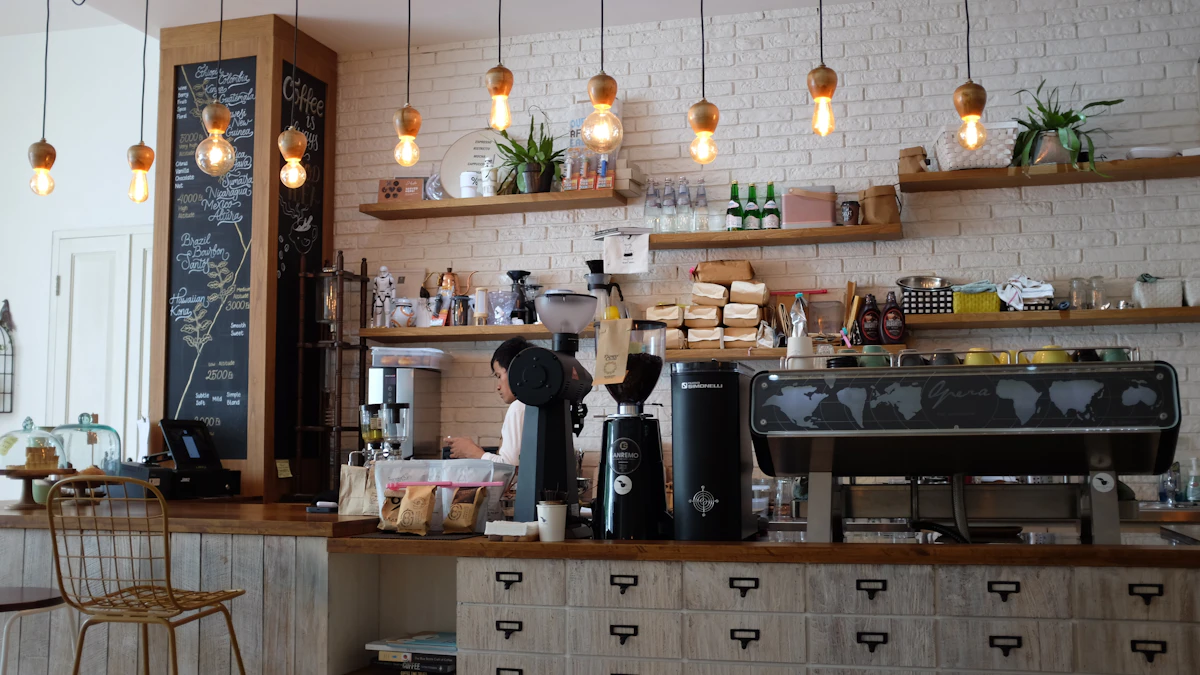
Artisan UK bakery workshop with fresh sourdough loaves cooling on wire racks beside open commercial deck ovens

UK Sector Specialism · Class E (Production)

The UK's Specialist Broker for Bakery Café Businesses

Connecting independent operators with vetted private and trade acquirers. Fully off-market. Fully protected.

Operational realities

What actually drives value in the bakery café sector

Bakery cafés are production-heavy operations with very high barriers to entry — commercial deck ovens, spiral mixers and climate-controlled prep rooms represent real capital expenditure. The trade-off is multi-channel scaling: an on-site retail counter, seated trade, and a wholesale book of local restaurant accounts that lift the multiple meaningfully.

Benchmark valuation framework

Production Capacity + Wholesale Revenue · 2× – 3× applied to adjusted net profit (SDE).

Capital intensity

High barrier to entry

Deck ovens, three-phase power, dough retarders and extraction systems represent six-figure fit-outs from scratch.

Revenue channels

Retail + seated + wholesale

Three independent revenue lines under one production roof — diversification buyers explicitly pay a premium for.

Key valuation risk

Key-person dependency

Owner-led recipe and bake-schedule knowledge must be systemised pre-sale, or the multiple compresses sharply.

Asset multiple

Top of the taxonomy

Permitted, operational production sites with existing extraction and high-capacity machinery command our strongest multipliers.

Take the next step — privately

Two paths into the bakery café market

Whether you're planning a confidential exit or building a considered acquisition brief, every conversation is NDA-gated and never appears on a public listings portal.

For owners looking to exit

Test the value of your business before you commit to a sale

Sector-specialist valuation and a private advisor conversation — with zero exposure of your business to the open market.

Secure Your Confidential Sector Valuation →

For registered & aspiring buyers

See the bakery café opportunities the open market never does

Register an acquisition brief or join the regional alert list and we'll match you against off-market businesses before they become publicly known.

Register Your Acquisition Brief →

Sector deep-dive · operator-grade analysis

Bakery Café: the operational, economic and lease realities

Long-form analysis written for owner-operators considering a confidential exit and for serious acquirers building a defensible brief. No surface-level overviews; no SEO filler.

Operational profile

Day-to-day workflow in a bakery café site

The UK bakery café is a production-led operation where the bake schedule, not the customer-facing trading hours, governs the operational rhythm. The classic site begins production between 02:00 and 04:00 with a head baker and one or two production team members, runs the customer-facing café from 07:30 to 16:30, and overlaps a wholesale dispatch window between 06:00 and 08:30 during which next-day standing orders move out to restaurant and hotel accounts. The production team typically clears the kitchen by 11:30; the cafe team operates the back end of the day standalone.

The dual-channel structure — retail counter trade and wholesale supply — is what makes the bakery café category structurally different from any other format in this taxonomy. The revenue split is commonly 55–72% retail counter (in-store bread, viennoiserie, sandwiches built on house bread, cake-slice, beverage) and 28–45% wholesale (loaves, sourdough batards, brioche buns, focaccia trays, sweet baked goods supplied to named restaurant, hotel, gastropub, and small-group cafe accounts). The wholesale book provides the production-volume baseline that justifies the deck-oven capital investment, and the retail counter provides the margin uplift that lifts the operation out of the thin wholesale-only margin band.

Cover dynamics on the retail side are similar to a specialty coffee shop — 60:40 takeaway-to-dine-in by transaction count, average ticket of £7–£14, dwell time of 18–40 minutes for solo customers. The bakery-specific dynamic is the morning bread-pickup trade: 25–38% of weekday morning transactions are a single loaf or a sliced loaf without an accompanying beverage purchase, sustained by a tight catchment of customers buying daily bread within a 5–8 minute walk. These transactions are operationally fast and structurally loyal — a customer who has bought a daily loaf for 12+ months will defend the trading territory against any direct competitor entry.

Customer acquisition is overwhelmingly product-led and geographic. The category resists paid digital acquisition more than any other in this taxonomy — bread is not a discretionary impulse purchase. Word-of-mouth, a single early review from a respected food critic, and inclusion in regional independent-business guides drive the long-tail customer flow. The wholesale book grows through direct chef outreach rather than digital channels: a head baker who attends the 06:00 trade markets, builds relationships at regional hospitality industry events, and runs a tasting morning twice a year for prospective wholesale accounts will steadily layer 1–2 new accounts per quarter.

The single workflow that determines whether the bakery is profitable or stretched is the morning bake schedule: a written production rota mapping each oven cycle (deck capacity, cycle time, batch size) against the day’s forecast retail demand and confirmed wholesale orders. Bakeries running this schedule rigorously waste 4–7% of daily production and stock-out 3–6 times monthly; bakeries running it informally waste 12–18% and stock-out 18–28 times monthly, with the stock-out losses compounding through the wholesale book.

Micro-economics

Margins, wage thresholds and waste discipline

Bakery café economics are built on high asset turnover, demanding production labour, and a sharply asymmetric margin profile between retail and wholesale. Retail counter gross margin sits at 70–78% on baked goods (bread, viennoiserie, cake), 76–84% on beverage, and 60–68% on sandwiches built on house bread. Wholesale gross margin is materially lower at 38–52% — the wholesale price of a sourdough loaf to a restaurant is commonly £3.40–£4.80 against a retail price of £5.20–£6.80, with broadly the same direct cost. Blended COGS for a well-run unit is 30–38% of net turnover, with the exact figure depending on the retail:wholesale mix.

Wages are the dominant cost line and are structurally different from every other format in this taxonomy. A bakery café carries a permanent head-baker salary (commonly £38,000–£52,000 against the broader hospitality wage market), one or two production assistants on early shifts at £13–£16/hour, plus the standard customer-facing rota. The benchmark wage:turnover ratio is 30–38%, with production wages running 14–19% of revenue and customer-facing wages running 16–22%. The 2024–2025 NLW uplift to £12.21/hr at 21+ has compressed margins by 2–4 percentage points; bakeries that have responded by lifting retail loaf prices 30–60p have largely held margin.

The capital-intensive equipment line is the structural barrier-to-entry and the structural cashflow burden. A three-phase electric deck oven (commonly Tom Chandley, Polin, Bongard, or Wachtel) costs £14,000–£28,000 new and carries a depreciated value of £7,000–£18,000 at year 5; a spiral mixer (commonly Pietroberto or Sottoriva) costs £6,000–£14,000 new and depreciates similarly; a retarder-prover (Wachtel, Koma, Bongard) costs £8,000–£18,000 new. Total kitchen plant for a serious wholesale-capable bakery is typically £45,000–£110,000 at depreciated value, with a meaningful share commonly on finance leases that must be novated to the buyer at sale.

Flour-side cost is the single most volatile input. UK milling wheat prices moved from £180–£220 per tonne (2019–2020) through £280–£360 (2022–2023) and have stabilised at £230–£280 (2024–2025), with the wholesale bread-flour price tracking roughly 1.6–2.0× the milling wheat price. A bakery using 280–420kg of flour weekly is exposed to the flour curve in a way that other formats are not, and the defensible mitigation is a written 13–26 week milling contract that hedges the spot price.

Waste management on the bake line is the discipline that converts the unit from breakeven to profitable. A disciplined bakery wastes 4–7% of daily production through end-of-day donation to food charity, staff-take-home allocation, and overnight conversion of stale bread into bread-crumb and croutons sold at the retail counter. An undisciplined bakery wastes 12–18% of daily production by failing to scale the bake against confirmed wholesale orders — the single highest-leverage operational discipline in the format.

Below-line, the recurring costs that catch buyers are the three-phase electricity standing charge and DNO supply review (commonly £3,800–£7,200 annually if the supply has been recently uprated), the oven service contract (£1,400–£2,800 annually for a 2–3 deck operation), the mill-side delivery and direct-supply premium (1.5–3.5% above wholesale spot price), and the wholesale-channel insurance rider covering product liability across the customer base.

Leasehold integrity

Class E, FRI obligations and plant assets

Bakery cafés sit under Class E in 2025, but the production element brings sector-specific compliance overlays that other Class E daytime formats do not face. The three structural risk areas are: the electricity supply and three-phase compliance; flour-dust health-and-safety obligations; and the goods-in and goods-out vehicle access provisions for both flour deliveries and wholesale-channel dispatch.

Three-phase electricity is the single most consequential physical infrastructure question. A serious bakery operation requires 80–160 amps of three-phase supply to power the deck oven, the spiral mixer, the retarder-prover, the refrigerated displays, and the customer-facing equipment simultaneously during the morning bake. Where the unit was previously trading as a non-production format (a café, a sandwich bar, a retail unit), the existing supply is commonly single-phase 60–100 amps and a supply uprate is required from the regional Distribution Network Operator (UK Power Networks, Northern Powergrid, SSEN, Western Power Distribution, Electricity North West, SP Energy Networks). The uprate timeline is 8–26 weeks, the cost is £4,000–£28,000 depending on cable routing, and the consent is contingent on the landlord agreeing to the physical works. Buyers acquiring an existing bakery should verify the supply is in-place and current; buyers acquiring a unit intending to convert to bakery should price the uprate as a discrete cost line.

Flour-dust is a notifiable occupational health issue under the Control of Substances Hazardous to Health (COSHH) Regulations 2002. Bakers are statistically the highest-incidence occupational-asthma cohort in UK food production, and the Health and Safety Executive treats flour-dust monitoring, local exhaust ventilation (LEV) on the mixing and decanting points, written COSHH risk assessments, and documented health-surveillance of production staff (annual respiratory questionnaires at minimum) as compliance non-negotiables. A buyer inheriting a bakery without documented LEV maintenance and COSHH records is inheriting a compliance liability of £6,000–£18,000 in remediation and HSE evidence build.

Goods access provisions matter operationally and contractually. The morning flour delivery (commonly a 14–26 tonne pallet truck) requires kerb access, a designated unloading slot, and a path from kerb to flour store that is dry, level, and free of customer-facing obstruction. The morning wholesale dispatch (typically a small van or two) requires loading-bay access during the 06:30–08:30 window. Where the lease requires both movements to use the front shopfront access, the operational friction is significant and the resale buyer pool narrows.

FRI lease compliance on the bakery’s physical plant is heavier than in other formats. The deck oven termination, the LEV ducting, the cold-room compressor on the rear elevation, and the spiral-mixer dust-management plant all sit under the tenant’s repairing covenant. Buyers should commission an independent dilapidations assessment at heads-of-terms stage; the absence of one is treated as a 8–14% goodwill discount.

The wholesale-channel commercial vehicle insurance, the wholesale-channel product-liability rider, the WRAS-compliant water supply documentation for bread production, and the SALSA or BRCGS certification (increasingly demanded by hotel and restaurant wholesale accounts) are the four documentary assets that materially change the buyer-side wholesale-book valuation. A bakery with a current SALSA certificate transacts a wholesale book at 9–13× monthly contribution; one without typically transacts at 6–9×.

Growth vectors

Pragmatic scaling for owner-operators

Bakery cafés scale through four operationally distinct vectors. The four are wholesale account acquisition, online direct-to-consumer subscription, retail product extension (jars, granolas, mixes), and a documented satellite-counter model.

Wholesale account acquisition is the most defensible scaling vector and is what justifies the deck-oven capital investment. A bakery with capacity to layer 8–16 additional wholesale accounts onto an existing operation can scale wholesale revenue by £3,200–£9,800 weekly within a 12–18 month window, with no incremental capital cost and modest incremental production-wage cost (typically one additional production assistant). The defensible accounts are: hotel breakfast services (steady standing orders, 7-day cycle, less price-sensitive), gastropub bread programmes (mid-volume, 5–6 day cycle), independent restaurants of 35+ covers (lower volume per account but high prestige and resilient to economic cycle), and corporate-canteen contractors (highest volume per account, most price-sensitive). A mature wholesale book contributing £5,000–£14,000 weekly is a separately valued asset at sale, commonly transacting at 9–13× monthly contribution.

Online direct-to-consumer subscription is the highest-margin scaling vector but operationally demanding. A bread subscription (weekly delivery of 1–3 loaves to a household within a 30-mile delivery radius, via a third-party courier or an own-van rota) commonly attracts £14–£26 per delivery at a gross margin of 48–62% after delivery cost. A subscription book of 80–240 households generates £6,000–£24,000 weekly revenue at 1–2 fulfilment days per week, with the customer cohort biased to high-LTV repeat customers (typical subscription churn is 4–8% monthly in the first year, stabilising to 2–4% from year two).

Retail product extension (branded jars of jam, granolas, baking mixes, ready-meal portions, biscuit tins for gifting) exploits the same kitchen capacity and the same brand. The product range is typically built around items the existing kitchen already produces for the cafe line, repackaged for retail. A mature retail line contributing £1,800–£6,200 of weekly revenue at a blended 42–58% gross margin is a structural margin layer that absorbs the kitchen’s otherwise-idle afternoon hours.

A satellite-counter model is the under-exploited vector. The defensible structure is a single production bakery feeding 2–5 minimal-footprint retail counters in nearby high-footfall locations — the counters carry no production capacity, share the production-side supplier purchasing and packaging across multiple revenue lines, and present as small-format bakery shops to customers. A successful operator with a 140 square metre production unit can layer 2–3 satellite counters of 18–30 square metres each within a 20-minute drive, lifting blended revenue by 75–130% against a 55–85% blended cost increase. Sites with a documented satellite playbook routinely transact at the upper end of the multiplier band; the playbook itself is the most valuable strategic asset at sale.

Event catering and special-order wedding cakes are tactical layers rather than strategic vectors. The categories commonly contribute 3–8% of revenue at high margin but require dedicated decoration labour and high event-side risk management; few operators scale this beyond a tactical layer.

Sector FAQs · expert-level answers

Bakery Café brokerage: deep operator questions answered

How does key-person dependency on the head baker affect the valuation of a UK bakery café?+

Key-person dependency is the single most consequential goodwill risk in the bakery café category. The head baker holds the recipe set, the supplier relationships on flour and grain, the wholesale-account technical relationships (chefs at the wholesale buyers will ring the head baker directly for special orders and recipe adjustments), and the production-rhythm institutional knowledge that converts a deck oven into a reliable bakery operation. Where the head baker is also the owner, the structural problem is that the buyer cannot acquire the trading business without acquiring the head-baker capability — and the head-baker capability is partially personal. The defensible structures are: a 6–18 month consulting tail written into the SPA (commonly £24,000–£48,000 paid over the period); a documented recipe book with hydrations, autolyse times, retard schedules, and baking parameters captured in writing before marketing the business; a deputy head baker promoted and on a contractual notice period of 6+ months ahead of marketing, ideally with 18+ months in role; and a key-person retention bonus payable by the buyer to the deputy head baker at 90 and 180 days post-completion. Bakeries with all four mitigations transact at 2.6×–3.0× SDE; those with none typically transact at 1.6×–2.0×.

How are bakery recipes treated as intellectual property when transferring ownership?+

UK bakery recipes are not legally protected as intellectual property — there is no copyright in a recipe (only in a particular written or photographic expression of one), no patent for a baking method that does not meet the high novelty bar required for patent grant, and no trade-mark protection for a product name unless the brand name has been independently registered. The practical protection is contractual: a written non-compete clause in the SPA (typically 12–24 months radius-restricted to 8–15 miles), a written non-solicitation clause covering both wholesale-account customers and named production staff, and a confidentiality clause covering the recipe book itself. The transferred recipe set should be documented as a physical and digital bundle delivered at completion, with the seller warranting that the bundle is complete and accurate. Where the bakery's brand has independent value (a registered word mark, a registered logo, a registered design), the brand is transferred as part of the SPA at a separately negotiated value, commonly 8–18% of the goodwill price for a regionally-recognised brand and 20–35% for a nationally-recognised one.

How do I schedule the production team for a 02:00 to 11:30 bake shift legally and sustainably?+

The Working Time Regulations 1998 govern the structural constraints: an average maximum 48-hour working week (the worker can opt out individually in writing, and most bakery production staff do); a minimum 11 consecutive hours rest in every 24-hour period (a 02:00 start means the prior shift must end by 15:00); a minimum 24 hours uninterrupted rest in every 7-day period (or 48 hours in 14 days); and a 20-minute rest break in any shift longer than 6 hours. Practically, the defensible production rota is a 4-on, 3-off pattern: a head baker and one production assistant working 02:00–11:30 four days a week, with a second 2-day production assistant covering the third and fourth bake shifts and the weekend bake. The wage structure should bake in a 10–18% nightshift premium against the standard hospitality day rate for the early-morning hours, which both meets industry expectation and supports retention. Cross-training the customer-facing morning shift staff to handle the first 1–2 hours of customer-facing operation while the production team finishes the bake is the structural fix that prevents the head-baker hours running long.

How is the depreciated value of bakery plant assessed at sale?+

Bakery plant is assessed independently of goodwill, commonly through a chartered valuer specialising in food-production equipment. The four major asset lines are valued on different bases: deck ovens (Tom Chandley, Polin, Bongard, Wachtel) depreciate on a 12–18 year useful life with straight-line depreciation, retaining 45–60% of new value at year 5 and 25–40% at year 10, with manufacturer service history materially affecting the figure; spiral mixers (Pietroberto, Sottoriva, Diosna) depreciate on a 15–20 year life, retaining 50–65% at year 5; retarder-provers (Wachtel, Koma, Bongard) depreciate on a 12–15 year life with refrigeration condition being the dominant variable; and ancillary equipment (dough sheeters, divider-rounders, banneton sets, bread baskets, peels) is valued at fair-market replacement cost rather than depreciated book value. Where any of this plant is on a finance lease (Shawbrook, BNP Paribas, manufacturer-backed schemes), the redemption value is netted against the gross asset valuation and the deal is structured to either settle the finance on completion or novate it to the buyer's creditworthiness. Total plant value for a serious bakery typically lands between £45,000 and £110,000 at sale, paid alongside goodwill rather than within it.

How much three-phase electricity does a bakery café need, and what does an uprate cost?+

A serious bakery operation running 2–3 decks, a spiral mixer, a retarder-prover, refrigerated displays, and a customer-facing coffee and counter operation requires 80–160 amps of three-phase 400v supply. A typical conversion from an existing single-phase 60–100 amp supply to a 100 amp three-phase supply (sufficient for a small-to-mid bakery) costs £4,000–£12,000 through the regional Distribution Network Operator (UK Power Networks for London and South East, Northern Powergrid for North East and Yorkshire, SSEN for Scotland and Southern England, Western Power Distribution / National Grid Electricity Distribution for Midlands and South West, Electricity North West, SP Energy Networks). The uprate timeline is 8–26 weeks: a quotation in 2–4 weeks, design and consent in 4–10 weeks, physical works in 1–8 weeks (the variable is whether cable trenching is required from the street). A 200+ amp uprate or a supply requiring substantial cable trenching commonly costs £14,000–£28,000 and stretches to 18–32 weeks. Buyers acquiring a unit that needs an uprate should treat the cost and the timeline as a non-recoverable working-capital line and price the goodwill accordingly.

What does it take to land and retain a hotel or restaurant wholesale account?+

Landing a wholesale account is operational; retaining it is technical. The landing process is typically a chef-to-baker direct outreach: a tasting morning at the bakery during which 6–10 prospective wholesale buyers (head chefs, F&B managers, kitchen procurement leads) try 8–14 bread variants alongside the existing baker's flour pairings and pricing structure. The conversion rate from tasting to standing order is commonly 35–55% within 4–8 weeks of the tasting morning. The retention is where the technical work happens: the wholesale buyer expects same-day-baked delivery (typically a 06:00–08:30 dispatch window for a 12:00 service), consistent product quality across 90+ delivery days a year, willingness to adjust hydrations and shapes for the buyer's specific service (a hotel breakfast service may want sliced loaves rather than whole; a gastropub may want batards rather than rounds), and the ability to scale up for known peak weeks (Christmas, Easter, summer wedding season) without quality degradation. The single biggest retention risk is missed deliveries — a single missed delivery during a busy service is often the trigger for a wholesale account to ring a competing bakery. Operators who invest in a dedicated wholesale-dispatch logistics rota and a same-day backup-bake protocol retain 88–95% of their wholesale book year-on-year; operators who informally absorb dispatch into the production rota typically retain 65–78%.

Pillar guides for bakery café operators

Flat-lay of a ceramic coffee cup, notepad and pen on a warm wooden desk — preparing a UK café valuation
Traditional cafe26 min read

The Master Guide to Valuing a Café or Coffee Shop in the UK

A long-form, owner-first valuation playbook covering Adjusted Net Profit (EBITDA) add-backs, the eight fixed-premises taxonomy frameworks, lease-length mechanics under the 1954 Act, realistic 2026 multiplier ranges, and the deflators that quietly cut six figures off an asking price.

Read guide →
Architectural facade of an independent UK boutique café on a quiet British high street
Bistro cafe14 min read

Navigating Class E Commercial Leases and Assignments for Cafe Owners

A working-owner's guide to Class E use, FRI lease liabilities, the Licence to Assign process, AGAs, rent reviews and the practical decisions that protect value when transferring a café leasehold.

Read guide →
Display of fresh artisan pastries inside the curved glass counter of a UK independent café
Traditional cafe12 min read

Café Rent Reviews & Lease Renewals — An Owner's Plain-English Guide

How upward-only rent reviews, the Landlord and Tenant Act 1954 renewal mechanism, surrender premiums and lease re-gears actually work — and the eighteen-month playbook independent café owners use to walk into negotiations from a position of strength.

Read guide →
Warm café lighting with steam rising from an espresso machine — the unmistakable atmosphere of a UK independent operator
Specialty coffee shop13 min read

The Broker Firewall: How to Sell Your Hospitality Business with Total Confidentiality

A working guide to confidential, off-market disposal — the real cost of public leaks, the matchmaking blueprint we use for trade and corporate buyers, when blind portal profiles still serve smaller assets, and how vetting and NDAs are layered to protect goodwill.

Read guide →
Organised behind-the-counter workspace inside an independent UK café — tools, tickets and prep stations laid out
Tea room13 min read

The Café Owner's Practical Guide to TUPE Regulations and Staff Transfers

A plain-English, working-owner's guide to TUPE — what automatically transfers with the business, the consultation timeline, the strict limits on post-sale contract changes, and the realistic handling of zero-hour contracts, refusals to transfer and pre-existing disciplinary issues.

Read guide →
Top-down latte art in a flat white — the daily cup-quality a UK café buyer is acquiring on day one
Traditional cafe14 min read

How to Buy a Café in the UK — A First-Time Buyer's Playbook

A practical, honest playbook for first-time UK café buyers covering realistic budgets, deposits, lender expectations, viewing red flags, due diligence priorities and what actually happens in the first ninety days after completion.

Read guide →
Stack of accounts paperwork beside a ceramic mug of black coffee at a UK café owner's kitchen table
Traditional cafe13 min read

The Café Buyer's Due Diligence Checklist — A 2026 UK Playbook

A practical, line-by-line due diligence checklist for UK café buyers covering the lease, accounts, EPOS data, staff, equipment, licensing, food hygiene, supplier contracts and the small details that quietly decide whether a deal becomes a good business or an expensive mistake.

Read guide →

Other UK fixed-premises sectors

Independent Bakery Café: Artisan bakery cafe for sale UK · independent craft bakery · wholesale bakery cafe business