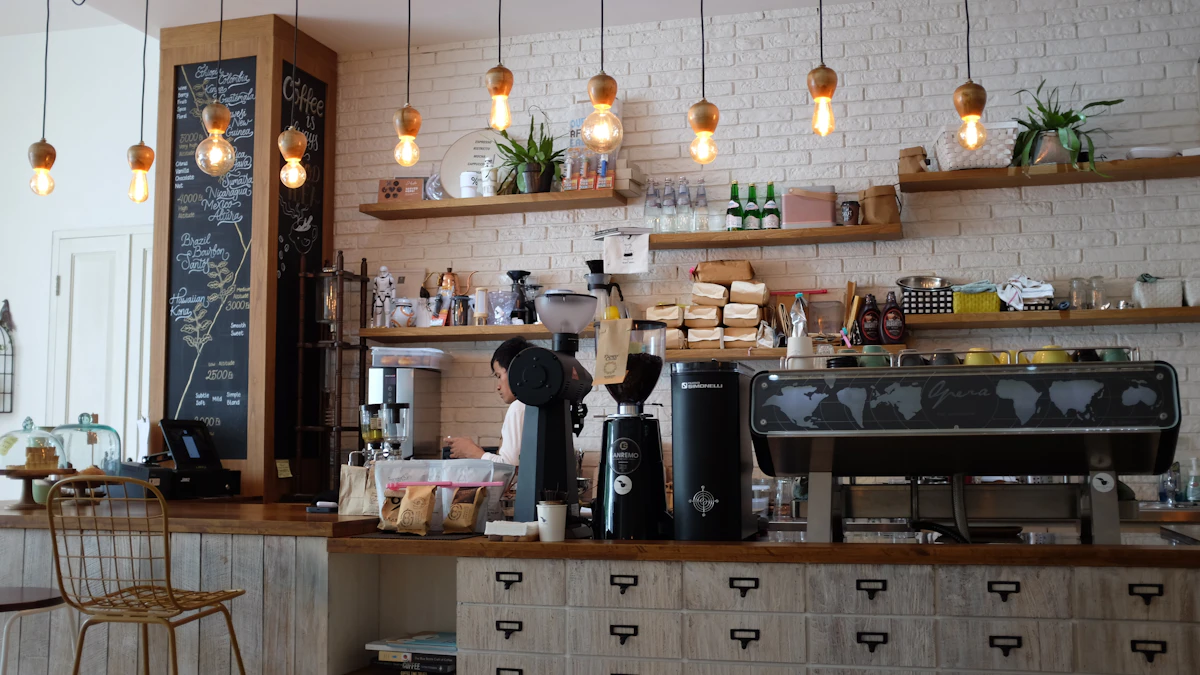
Sleek high-capacity stainless steel UK sandwich bar counter with fresh salads, sourdough sandwiches and prep mid-service

UK Sector Specialism · Class E (Food to go)

The UK's Specialist Broker for Sandwich Bar Businesses

Connecting independent operators with vetted private and trade acquirers. Fully off-market. Fully protected.

Operational realities

What actually drives value in the sandwich bar sector

Sandwich bars are high-volume, fast-throughput cash engines. Revenue compresses into a brutally tight three-hour lunch window, minimal seating keeps business-rates exposure down, and valuation upside is unlocked almost entirely by proving corporate catering accounts, delivery-radius capture and lightning-fast counter design.

Benchmark valuation framework

Footfall Volume / Corporate Contracts · 0.35× – 0.55× applied to annualised weekly takings.

Revenue window

~3 hrs / day

11:30–14:30 is the entire P&L. Pre-prep, queue throughput and till speed are the operational levers buyers underwrite.

Seating footprint

Low / grab-and-go

Smaller covers reduce rateable value and rent burden — a structural margin advantage versus seated cafés.

Premium revenue line

B2B catering contracts

Office buffet accounts and recurring corporate lunch contracts smooth volatile high-street footfall and add real broker weight.

Cost discipline

Labour scheduling

Idle morning and afternoon hours kill the wage line. Tight, peak-loaded rotas are the single biggest profit lever.

Take the next step — privately

Two paths into the sandwich bar market

Whether you're planning a confidential exit or building a considered acquisition brief, every conversation is NDA-gated and never appears on a public listings portal.

For owners looking to exit

Test the value of your business before you commit to a sale

Sector-specialist valuation and a private advisor conversation — with zero exposure of your business to the open market.

Secure Your Confidential Sector Valuation →

For registered & aspiring buyers

See the sandwich bar opportunities the open market never does

Register an acquisition brief or join the regional alert list and we'll match you against off-market businesses before they become publicly known.

Register Your Acquisition Brief →

Sector deep-dive · operator-grade analysis

Sandwich Bar: the operational, economic and lease realities

Long-form analysis written for owner-operators considering a confidential exit and for serious acquirers building a defensible brief. No surface-level overviews; no SEO filler.

Operational profile

Day-to-day workflow in a sandwich bar site

The UK sandwich bar is a high-velocity food-to-go operation engineered around a single, brutally compressed lunch peak. The classic site opens at 06:30 or 07:00 to capture a small breakfast trade (porridge, breakfast bap, coffee), but the operational and financial day is decided between 11:30 and 14:00. In that 150-minute window a successful unit takes 55–70% of weekday revenue and serves 180–420 transactions, depending on bar layout, queue-management discipline and corporate contract intake.

The customer base is structurally Monday-through-Friday. Weekday transactions account for 88–95% of weekly revenue in central business district (CBD) and office-park sandwich bars, with Saturday at 5–9% and Sunday closed in most operations. This compressed week is both the strength and the structural vulnerability of the format: a sandwich bar in a fully populated CBD trading the equivalent of seven days of revenue in five days carries a 30–40% labour-efficiency advantage over a daytime café, but is fully exposed to the post-pandemic hybrid-work shift that has compressed Tuesday-through-Thursday trade and gutted Mondays and Fridays in some markets.

Cover dynamics are almost irrelevant. A typical sandwich bar carries 0–14 seats (often 0 because seated covers above 14 trigger business rates uplift in many boroughs — see the leasehold section). The operational engine is throughput per square metre of counter, not cover rotation. A well-laid 5–7 metre counter with two build stations, a single till station, and a separate coffee station can process 130–180 transactions per hour during the lunch compression with three trained staff; the same counter with a single build station and a combined till-and-coffee operator caps at roughly 80 transactions per hour and bleeds 25–35% of theoretical peak revenue to walk-aways.

The customer acquisition model is geographic and contractual. The walk-in catchment is a 4–6 minute walking radius from a major office anchor, with conversion materially dropping outside that envelope regardless of brand strength. The B2B layer is where most sandwich-bar growth happens: weekly platter contracts with law firms, accountancy practices, recruitment houses, financial services boutiques, and serviced-office providers (Regus, WeWork, IWG) commonly run at £180–£850 per delivery, 2–6 deliveries per week per client. A mature B2B book of 18–35 named clients contributing £3,500–£9,000 weekly revenue is, by some distance, the most consequential asset a sandwich bar carries to sale.

Service model is counter-order, build-to-order or pre-made grab-and-go (commonly a blend), with cashless payment dominant. The single workflow that determines whether the lunch peak is profitable is the assembly call: a single till operator with a written ticket or a digital order display, calling the build clearly to a dedicated assembler, will sustain 60–90 builds per hour. The same operation with an undifferentiated team taking calls verbally caps at 35–50 builds per hour and bleeds 18–28% of peak revenue.

Micro-economics

Margins, wage thresholds and waste discipline

Sandwich bar economics are built on tight food cost and high asset turnover. The benchmark UK independent runs 72–82% of revenue through cold and hot sandwich-and-wrap builds, 10–18% through beverage (coffee, soft drinks, juice), and 6–14% through ambient snacks, fruit and confectionery. Food gross margin on cold builds is 62–72% on mid-tier supplier specs; hot fillings (chicken, bacon, halloumi, falafel) push margins to 58–66% because of cook-line wastage. Beverage gross margin is the highest line at 78–86%. The blended COGS for a well-run unit is 28–34% of net turnover.

Meal-deal engineering is the single most consequential menu-design discipline. A meal-deal — a sandwich, a snack, a drink for £5.50–£7.50 — is the dominant lunch transaction in the format, commonly 55–75% of weekday lunch tickets. The economics are deliberately calibrated: the sandwich carries a 64–72% gross margin, the snack 38–46%, and the drink (a chilled bottled water or canned soft) 52–64%, blending to a meal-deal gross margin of 56–62%. Bundled this way, the average ticket lifts £1.20–£1.80 against a standalone sandwich purchase and the absolute margin per transaction lifts 38–52%, even though the percentage margin falls.

Wages run at a meaningfully better ratio than in coffee-led or daytime-diner formats because the compressed week concentrates labour into productive hours. The benchmark wage:turnover ratio is 22–28%, including the working owner’s notional salary and employer NICs at 13.8%. The 2024–2025 NLW uplift to £12.21/hr at 21+ has pushed sandwich bars 1.5–3 percentage points up the wage ratio, recoverable by either lifting meal-deal prices 30–60p or by trimming the morning shift to a single staff member from 07:00 to 10:30 where breakfast trade is thin.

Packaging cost is the single largest below-line surprise to new owners. Sustainable packaging (compostable wraps, bagasse trays, paper carrier bags) commonly costs 18–38p per transaction against 6–12p for legacy plastic. A sandwich bar serving 1,200 weekly transactions runs through £230–£480 of packaging weekly — £12,000–£25,000 annually — and packaging inflation has run at 6–11% annually through 2024–2025 as supplier-side cost shocks rolled through. This line should be modelled as a discrete cost in any valuation analysis.

Waste mitigation is built around shrinkage management. A disciplined unit runs daily food waste at 4–8% of food spend, supported by a 14:00 mark-down cascade (40–60% off pre-made grab-and-go, scaling deeper through 16:00 close), a documented Friday-only reduced-intake against an 8-week rolling demand model, and an evening waste-redistribution programme with Olio, Too Good To Go, or a local food charity. Undisciplined units routinely run 13–22% food waste, which alone compresses net margin by 4–8 percentage points.

Leasehold integrity

Class E, FRI obligations and plant assets

Sandwich bars sit under Class E in 2025, with the same flexible pivot rights to retail, restaurant or office use that other daytime formats enjoy. The lease landscape is materially different from a cafe or tea room because the location pool divides almost entirely between two cohorts: high-rent CBD units held by institutional landlords (Landsec, British Land, Aviva, M&G, GPE), and lower-rent parade/secondary-CBD units held by smaller commercial landlords. The two carry very different lease friction profiles.

Institutional CBD leases carry tighter formal terms and predictable assignment paths. Rent is typically a fixed quarterly figure (set on a 5-year RPI-linked review cycle), service charge is a separately invoiced quarterly line, and the alienation clause permits assignment to a buyer with landlord consent “not to be unreasonably withheld” subject to financial references and an authorised guarantee agreement (AGA). The trade-off is rent absolute: a 60–90 square metre CBD unit commonly carries a rent of £48,000–£120,000 a year plus 15–22% service charge. The benchmark rent-to-turnover ratio for a healthy CBD sandwich bar is 9–14%; above 18% the operator is in structural difficulty and buyer financing dries up.

Smaller commercial leases on parade and secondary-CBD units are less formal and more variable. The risks are the standard FRI repairing covenant, an absent or restrictive alienation clause, and informal rent arrangements that may have been historically below-market and are likely to reset on a change of ownership. Buyers should always commission a Land Registry title check on the freeholder, request the last three years of formal rent demands, and confirm the rent review cycle in writing before exchange.

The structural class-E quirk that sandwich bars specifically navigate is the business rates seating threshold. In most boroughs, a unit operating with seated covers (any number) triggers business rates as a Class E restaurant rather than as a Class E retail unit, with rates payable on the rateable value (RV) of the property — commonly £14,000–£38,000 for a typical sandwich-bar footprint. A unit operating purely as grab-and-go without seated covers (or with 0–14 informal stools that do not trigger the council’s seating-cover assessment) frequently qualifies for small-business rates relief (SBRR), which is 100% relief up to an RV of £12,000 and tapered up to £15,000. The decision to add seating therefore has a discrete tax consequence that materially changes the unit’s structural margin.

Kitchen plant is light by hospitality standards. The unique assets are a refrigerated under-counter prep table (commonly Williams or Foster, £1,400–£2,800 depreciated), a panini grill or contact toaster (£380–£620), a single-fryer where hot chips feature (£480–£820), a coffee machine (commonly a Sanremo Verona or a two-group Astoria, £3,800–£6,400 depreciated), and a grab-and-go open-front merchandiser (£1,800–£3,400). Extraction is rarely a Class 1 hood issue in sandwich bars because there is no gas range; the panini grill and the small fryer require Class 2 mechanical ventilation only, which simplifies landlord consent meaningfully.

Growth vectors

Pragmatic scaling for owner-operators

Sandwich bars scale through four operationally distinct vectors. The four are corporate B2B contract acquisition, breakfast-trade extension, delivery-aggregator integration, and a documented satellite-site model.

Corporate B2B contract acquisition is the highest-margin and most defensible scaling lever. A weekly platter contract with a single 40–120 employee firm commonly transacts at £180–£850 per delivery, 2–6 deliveries weekly, at a gross margin of 58–66% — materially better than the walk-in transaction average because the order is batched, the build is done in the 09:30–11:00 prep window outside the peak, and the delivery is consolidated. A mature B2B book of 22–40 named clients contributing £4,500–£11,000 weekly revenue commonly transacts at sale as a separately valued asset at 8–12× monthly contribution, on the strict condition that the contracts are documented, the contact roster is transferable, and the buyer has a 60–120 day handover during which the existing operator personally introduces the contact lead at each client.

Breakfast trade extension exploits the existing fixed cost base. A sandwich bar that opens at 07:00 to capture commuter and pre-meeting trade adds 60–120 minutes of productive trading without proportionate incremental wages (the same morning shift staff are typically required from 09:00 anyway for prep). A disciplined breakfast menu — a bacon roll meal-deal, a porridge-and-coffee bundle, a fruit pot with granola — commonly contributes £1,800–£4,200 of weekly revenue at a gross margin of 64–72%, equivalent to a 9–14% revenue uplift on the lunch operation.

Delivery-aggregator integration is structurally favourable for sandwich bars in a way it isn’t for tea rooms or specialty coffee. The product (a sandwich, a wrap, a salad) survives a 12–18 minute aggregator ride well, the build is fast, and the platform brings a different customer cohort (the home-office worker, the school-pickup parent, the unwell-day customer) that does not cannibalise walk-in trade. Uber Eats, Deliveroo and Just Eat commonly contribute 8–18% of weekly revenue at 28–33% commission, with a net contribution margin of 22–32%. Smart operators use a delivery-specific menu (excluding the lowest-margin items, batching dense protein wraps suited to the platform’s 30–40 minute delivery window) and price 8–14% above the in-store walk-in price to recover the commission load.

A satellite-site model is the most under-exploited scaling vector. The defensible structure is a single production kitchen feeding 2–5 minimal-footprint satellite counters in adjacent CBD locations — a hub-and-spoke that shares prep labour, supplier purchasing, and packaging across multiple revenue lines. A successful operator with a 90 square metre flagship unit can layer 2 satellite counters of 25–35 square metres each within an 8-minute walk, lifting blended revenue by 80–140% against a 60–90% blended cost increase. Sites with this documented satellite playbook transact at the upper end of the multiplier band; sites without it transact at the lower end.

Catering for events, weddings, and corporate days is a tactical layer rather than a strategic one in this format. The category contributes 3–7% of revenue typically, with high seasonality and a margin that is competitive but not materially better than the weekday B2B contract book.

Sector FAQs · expert-level answers

Sandwich Bar brokerage: deep operator questions answered

How do I retain corporate contract clients during the sale of my sandwich bar?+

The defensible structure is a contractual handover, not an assumption. Corporate contract clients (law firms, accountancy practices, recruitment houses, serviced-office providers) are typically buying a personal relationship with the existing operator as much as a sandwich quality — the procurement contact at each client expects to deal with the same person they've dealt with for 18–60 months. The structural fix is a 60–120 day post-completion handover written into the SPA: the existing operator personally introduces the buyer to the procurement contact at each named client, attends the first one or two deliveries in person, and either (a) accepts a contractual continuity bonus (commonly 10–18% of B2B revenue across the first 6 months post-completion, paid contingent on contract retention) or (b) underwrites a contractual contract-retention guarantee with a sliding-scale repayment if more than 15% of the contracted book churns within 12 months. Deals structured this way typically retain 88–95% of the B2B book; deals structured as a clean break without contact-level handover routinely lose 28–45% within two trading quarters.

How does the bar layout of a sandwich shop affect lunch-peak throughput and saleability?+

Bar architecture is the single most important physical determinant of throughput. The defensible layout for a peak of 150+ transactions per hour is a 5–7 metre linear counter with three discrete stations: a dedicated till operator at the customer-entry end taking the order on a Lightspeed, Square or Vantiv terminal with a kitchen display screen visible to the build team; one or two dedicated build stations in the middle with refrigerated under-counter prep and a panini grill within arm's reach; and a separate coffee-and-collection station at the customer-exit end so the build queue and the coffee queue do not collide. The customer path runs in a single direction — order, watch the build, collect at the end — and the staff path runs perpendicular without crossing. Sites with this layout transact at the upper end of the sandwich-bar multiplier band because the buyer can underwrite the throughput. Sites with a combined till-and-coffee operator, a sideways-facing build station, or a U-shaped customer path that backs up to the door routinely transact 12–22% below comparable revenue because the buyer prices in the cost of a £14,000–£35,000 refit.

How is packaging cost inflation managed in a UK sandwich bar P&L?+

Packaging is a structural cost line, not an operational rounding error. The 2024–2025 reality is that sustainable packaging (compostable kraft wraps, bagasse trays, recycled-fibre carrier bags, paper coffee cups with PLA liners) costs 18–38p per transaction against 6–12p for legacy plastic, and supplier-side cost inflation has run at 6–11% annually for three years. A sandwich bar serving 1,200 weekly transactions runs through £12,000–£25,000 annually on packaging — a discrete margin line that a thinly-modelled P&L will understate. The defensible mitigations are: negotiating a 26–52 week fixed-price supplier contract through a wholesale aggregator (Bunzl, Brakes, Bidfood) that hedges the inflation curve; redesigning the build to use a single carrier piece rather than a wrap + bag + napkin stack; introducing a 20p discount for customers bringing reusable containers, which directly migrates 4–8% of transactions off the packaging line; and excluding the most packaging-intensive items (composite salads, bagasse-tray hot meals) from the delivery aggregator menu where the commission load already compresses margin.

Does adding seating to my sandwich bar trigger a business rates uplift?+

In most English and Welsh boroughs, yes — and the financial consequence is meaningful. A unit operating purely as grab-and-go without seated covers commonly qualifies for small business rates relief (SBRR), which is 100% relief on rateable values up to £12,000 and tapered up to £15,000. Adding seated covers (even a small number, in some boroughs as few as 6–10) triggers the council's reassessment of the unit as a Class E restaurant rather than as a Class E retail unit, with rates payable on the full rateable value — commonly £14,000–£38,000 annually for a typical sandwich-bar footprint. The reassessment is council-discretion and often complaint-driven; some operators trade with informal stools for years without trigger, others are reassessed within a quarter of installing tables. The defensible analysis before adding seating is to model the projected covers-uplift revenue against the projected rates liability and confirm in writing with the local Valuation Office Agency (VOA) before installing fixed furniture. In London Zone 1 and major regional CBDs, seating is rarely net positive on a pure rates calculation.

How do I manage post-lunch food waste in a sandwich bar without bleeding margin?+

Post-lunch waste is the single largest unforced margin leak in the format. The defensible playbook is a multi-stage cascade. From 14:00, a written mark-down schedule reduces pre-made grab-and-go items by 30–40% (typically with a printed sticker price reduction visible at the counter), pulling forward demand from the 14:30–15:30 walk-in trade. From 15:30, the markdown deepens to 50–60%, and the remaining stock is migrated to the Too Good To Go or Olio platforms for collection during the 16:30–17:00 window. From 17:00, the operator runs a documented Friday-only reduced intake against an 8-week rolling demand model — meaning Friday stock buys are typically 18–24% lower than Monday-through-Thursday because of the weekday-skewed customer base. Sites that operate this cascade typically run food waste at 4–7% of food spend; sites without it routinely run 13–22%. The cumulative annual difference at 1,200 weekly transactions and £4.20 average sandwich cost is £6,800–£14,500 of recovered gross margin.

How is a sandwich bar valued when its trading is concentrated into a 3-day Tuesday-to-Thursday window?+

The post-pandemic hybrid-work reality has compressed many CBD sandwich-bar weeks from a Monday-to-Friday 5-day distribution to a Tuesday-to-Thursday 3-day concentration, with Monday and Friday routinely down 35–55% on 2019 baselines. Valuation-side, this changes both the multiple and the diligence ask. Acquisition lenders (HSBC, Lloyds, NatWest commercial) underwrite a 3-day-concentrated trading week on a more conservative basis than a flat 5-day distribution, because the unit is structurally exposed to any future shift in hybrid-work norms. The multiplier band typically settles at the lower third of the 0.35×–0.55× annualised turnover range, equivalent to a 12–18% discount against pre-pandemic comparables. The defensible mitigations are: a documented and growing B2B contract book that is not exposed to the in-person Monday/Friday trade; an extended trading-window strategy (weekend brunch, early-evening sandwich-and-soup commuter trade) that diversifies the revenue concentration; and a delivery-aggregator revenue layer (8–18% of revenue) that exists specifically to fill the Monday and Friday lunch troughs. Sites with all three mitigations in place transact closer to the upper end of the band.

Pillar guides for sandwich bar operators

Flat-lay of a ceramic coffee cup, notepad and pen on a warm wooden desk — preparing a UK café valuation
Traditional cafe26 min read

The Master Guide to Valuing a Café or Coffee Shop in the UK

A long-form, owner-first valuation playbook covering Adjusted Net Profit (EBITDA) add-backs, the eight fixed-premises taxonomy frameworks, lease-length mechanics under the 1954 Act, realistic 2026 multiplier ranges, and the deflators that quietly cut six figures off an asking price.

Read guide →
Architectural facade of an independent UK boutique café on a quiet British high street
Bistro cafe14 min read

Navigating Class E Commercial Leases and Assignments for Cafe Owners

A working-owner's guide to Class E use, FRI lease liabilities, the Licence to Assign process, AGAs, rent reviews and the practical decisions that protect value when transferring a café leasehold.

Read guide →
Display of fresh artisan pastries inside the curved glass counter of a UK independent café
Traditional cafe12 min read

Café Rent Reviews & Lease Renewals — An Owner's Plain-English Guide

How upward-only rent reviews, the Landlord and Tenant Act 1954 renewal mechanism, surrender premiums and lease re-gears actually work — and the eighteen-month playbook independent café owners use to walk into negotiations from a position of strength.

Read guide →
Warm café lighting with steam rising from an espresso machine — the unmistakable atmosphere of a UK independent operator
Specialty coffee shop13 min read

The Broker Firewall: How to Sell Your Hospitality Business with Total Confidentiality

A working guide to confidential, off-market disposal — the real cost of public leaks, the matchmaking blueprint we use for trade and corporate buyers, when blind portal profiles still serve smaller assets, and how vetting and NDAs are layered to protect goodwill.

Read guide →
Organised behind-the-counter workspace inside an independent UK café — tools, tickets and prep stations laid out
Tea room13 min read

The Café Owner's Practical Guide to TUPE Regulations and Staff Transfers

A plain-English, working-owner's guide to TUPE — what automatically transfers with the business, the consultation timeline, the strict limits on post-sale contract changes, and the realistic handling of zero-hour contracts, refusals to transfer and pre-existing disciplinary issues.

Read guide →
Top-down latte art in a flat white — the daily cup-quality a UK café buyer is acquiring on day one
Traditional cafe14 min read

How to Buy a Café in the UK — A First-Time Buyer's Playbook

A practical, honest playbook for first-time UK café buyers covering realistic budgets, deposits, lender expectations, viewing red flags, due diligence priorities and what actually happens in the first ninety days after completion.

Read guide →
Stack of accounts paperwork beside a ceramic mug of black coffee at a UK café owner's kitchen table
Traditional cafe13 min read

The Café Buyer's Due Diligence Checklist — A 2026 UK Playbook

A practical, line-by-line due diligence checklist for UK café buyers covering the lease, accounts, EPOS data, staff, equipment, licensing, food hygiene, supplier contracts and the small details that quietly decide whether a deal becomes a good business or an expensive mistake.

Read guide →

Other UK fixed-premises sectors

Sandwich Bar & High-Street Food-to-Go: City centre sandwich bar for sale UK · food-to-go business · sandwich shop corporate catering revenue