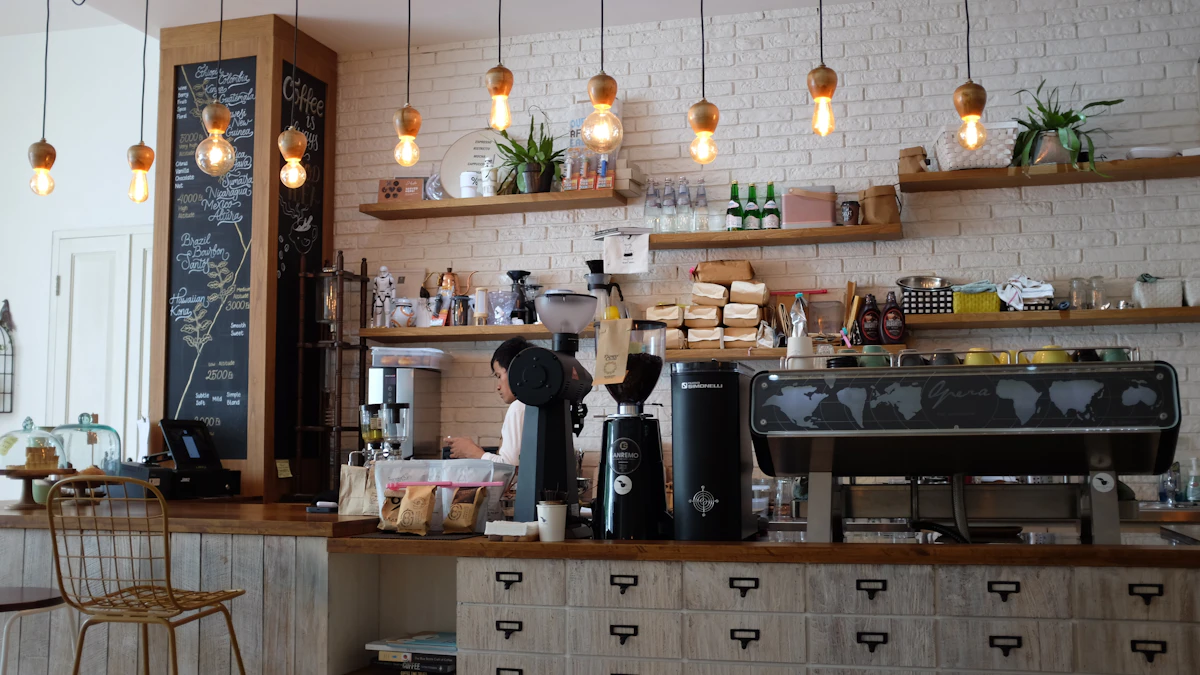
Vibrant hyper-modern UK dessert parlour interior with neon signage, clean marble surfaces and a gelato counter mid-service

UK Sector Specialism · Class E (Late Night)

The UK's Specialist Broker for Dessert Parlour Businesses

Connecting independent operators with vetted private and trade acquirers. Fully off-market. Fully protected.

Operational realities

What actually drives value in the dessert parlour sector

Dessert parlours run a late-night trading profile that leans heavily on evening delivery aggregators — Deliveroo, Just Eat and Uber Eats. Core ingredients (waffle mixes, gelato bases, crepes) deliver strong gross margins, but the brand is intensely visual: social engagement and app marketplace ranking carry as much weight as the P&L itself.

Benchmark valuation framework

Delivery App Revenue Volume · 1.4× – 2.2× applied to annualised weekly takings.

Trading window

Evening & late-night

Friday and Saturday 18:00–23:00 carry the week. A daytime-only dessert parlour is structurally undervalued.

Channel mix

Aggregator-heavy

20–30% commission on app orders compresses net margin. The counter-vs-app split is a critical broker disclosure.

Marketing asset

Social engagement + app rating

Documented IG/TikTok reach and 4.5+ aggregator ratings are tangible goodwill items in the deal pack.

Ingredient GP

Sector-leading

Waffles, gelato and crepe batters yield some of the strongest food GPs across our entire daytime taxonomy.

Take the next step — privately

Two paths into the dessert parlour market

Whether you're planning a confidential exit or building a considered acquisition brief, every conversation is NDA-gated and never appears on a public listings portal.

For owners looking to exit

Test the value of your business before you commit to a sale

Sector-specialist valuation and a private advisor conversation — with zero exposure of your business to the open market.

Secure Your Confidential Sector Valuation →

For registered & aspiring buyers

See the dessert parlour opportunities the open market never does

Register an acquisition brief or join the regional alert list and we'll match you against off-market businesses before they become publicly known.

Register Your Acquisition Brief →

Sector deep-dive · operator-grade analysis

Dessert Parlour: the operational, economic and lease realities

Long-form analysis written for owner-operators considering a confidential exit and for serious acquirers building a defensible brief. No surface-level overviews; no SEO filler.

Operational profile

Day-to-day workflow in a dessert parlour site

The UK dessert parlour is a late-night hospitality format engineered around evening leisure trade, with a customer demographic biased to 16–28 year-olds spending discretionarily on shareable indulgence products. The classic site opens at 12:00 or 13:00 to capture a small daytime walk-in trade, but the operational and financial day is decided between 18:00 and 23:30 across Thursday, Friday, Saturday, and (in many sites) Sunday. In that 5.5-hour evening window a successful unit takes 65–80% of weekly revenue and serves 220–480 transactions, split roughly evenly between dine-in and delivery-aggregator.

Cover dynamics are completely different from daytime cafe formats. A dessert parlour of 32–64 covers turns covers 1.4–2.2 times across a Friday or Saturday evening, with average tickets of £14–£26 for dine-in and £18–£32 for delivery (delivery tickets are larger because the order is typically a group order for a household). Dwell time runs 45–80 minutes, with the operational engine being the kitchen’s build-throughput rather than the cover turnover rate — a Belgian waffle, a sundae, a hot brownie or a crepe build takes 6–14 minutes from order to plate, and a kitchen carrying two build stations and a single dedicated plater will sustain 24–36 plates an hour with three trained team members.

The structural seasonality runs counter to most daytime formats. Dessert parlours peak in summer (school holidays, longer evenings, walk-in leisure trade) and in winter half-terms and the Christmas-and-Valentine’s window. The trough is mid-January through mid-March, where weekday evenings can run at 40–55% of summer revenue. Smart operators use the trough to schedule annual maintenance, staff training, and menu development — sites that simply trade through the trough on full staffing routinely lose 6–11% of annual margin to the off-peak.

The delivery-aggregator channel is structural rather than tactical in this format. Uber Eats, Deliveroo and Just Eat commonly contribute 38–58% of weekly revenue across the UK dessert parlour market in 2025 — the highest aggregator share of any format in this taxonomy. The customer cohort that orders dessert at 21:30 on a Friday is structurally different from the cohort that walks in: it’s a household ordering for 2–4 people, the average ticket is higher, and the conversion is driven by the aggregator platform’s discovery surface (top-of-category listings, ratings, photography) rather than by physical-location footfall.

The customer acquisition model is hybrid: Instagram and TikTok organic content driving brand recognition; aggregator platform ratings (specifically Uber Eats “Top Eats” tiering and Deliveroo “Premier” tiering) driving evening delivery conversion; and walk-in leisure footfall for the dine-in cohort. Sites that invest in production-quality social content (commonly 8–14 hours per week of dedicated content labour, often a part-time content creator on a 12–18 hour contract) regularly outperform organically-styled sites by 18–34% on revenue per square metre.

Micro-economics

Margins, wage thresholds and waste discipline

Dessert parlour economics are built on extremely high product gross margin offset by aggressive aggregator commission load and acute peak-hour wage compression. Product gross margin on the core dessert categories is exceptional: gelato at 78–86%, waffles and crepes at 72–82%, sundae bases on commodity ice cream at 76–84%, hot chocolate and milkshake at 80–88%, and brownie/cookie warmed-and-plated at 70–80%. Beverage gross margin is the highest at 82–90%. The blended COGS for a well-run dine-in unit is 18–24% of net turnover — among the lowest of any format in this taxonomy.

The aggregator commission load completely reshapes the margin profile of the 38–58% of revenue that flows through delivery. Uber Eats and Deliveroo standard commission is 28–33% of the gross order value (operators can negotiate down to 22–26% on volume); Just Eat is typically 14–18%. After commission, the effective gross margin on a £18 delivery sundae built on commodity ice cream is 38–48% rather than the 76–84% it would carry on a walk-in dine-in basis. The defensible response is a separate delivery-channel menu that excludes the most aggregator-margin-eroding items, a delivery-channel price premium of 14–22% over the dine-in price, and a bundled delivery-only meal-deal that lifts the average ticket and amortises the fixed packaging and commission load across more product lines.

Wages are structurally concentrated into the evening peak. The benchmark wage:turnover ratio for a dessert parlour is 22–30%, with the strict majority of paid hours falling between 17:00 and 23:30 across Thursday-Sunday. This is operationally lighter than most daytime formats because the operator is not absorbing an 8-hour weekday morning shift at break-even hours. The 2024–2025 NLW uplift to £12.21/hr at 21+ has compressed margins by 1.5–3 percentage points, recoverable by either lifting menu prices 50p–£1.20 or by tightening the Thursday rota where evening trade is often softer than Friday-Saturday.

Ingredient sourcing materially affects the margin profile. Premium gelato bases (using whole milk, single-origin cocoa, named-supplier fruit purees) cost 1.4–1.8× what commodity gelato bases cost, but support a menu price 1.6–2.2× higher and a brand positioning that justifies dine-in covers at premium ticket sizes. The strategic decision is whether to position as premium-artisan (high COGS, high ticket, lower aggregator exposure) or as accessible-casual (low COGS, lower ticket, high aggregator exposure) — both are valid but the operator who flips between them serves neither cohort well.

Below-line, the recurring costs that catch buyers are the gelato display freezer servicing (commonly £1,400–£2,400 annually for a 12–18 pan display), aggregator platform setup and photography fees (commonly £800–£2,400 across the three platforms), the late-licence operating costs where the unit holds a Premises Licence permitting trading beyond 23:00 (annual fee £180–£635), the social-media content production cost (commonly £800–£2,400 monthly for the dedicated content labour), and the higher commercial waste contract for the evening waste vector (£2,400–£4,200 annually because evening trading produces denser waste flows than daytime equivalents).

Leasehold integrity

Class E, FRI obligations and plant assets

Dessert parlours sit under Class E in 2025, with the late-night trading element occasionally introducing a planning-condition overlay that other Class E daytime formats do not face. The most consequential overlay is the trading-hours condition: many parade and high-street units carry a planning condition limiting trading beyond 22:00 or 23:00, and where the dessert parlour’s viability depends on trading to 23:30 or 00:00, that condition must be either confirmed compatible or formally varied through a Section 73 application to the local planning authority (typically 8–14 weeks).

The Premises Licence under the Licensing Act 2003 is the other consequential consent. A dessert parlour trading beyond 23:00 typically requires a Premises Licence covering “late night refreshment” (the supply of hot food or hot drink between 23:00 and 05:00). The application is 4–6 weeks via the local licensing authority, costs £100–£635 depending on the rateable value band, and is subject to local representations from residents, the police, and environmental health. Sellers should disclose the Premises Licence status at the IM stage; buyers price an absent or restrictive licence as a 6–14% goodwill discount.

The franchise overlay is sector-specific. The UK dessert parlour market includes substantial branded-franchise networks (Creams Cafe, Kaspa’s, Heavenly Desserts, Treatz Desserts, Coffee Lab, Glow Desserts), and the franchise relationship materially affects the lease and the sale. Franchise sites operate under a separate franchise agreement that governs branding, menu, supplier sourcing, royalty payments (commonly 5–9% of gross revenue plus a 1.5–3% marketing levy), and territorial protection. The franchise agreement must be novated to the buyer at sale, and the franchisor holds a contractual right of refusal — a buyer who is unacceptable to the franchisor cannot complete. The typical novation timeline is 8–14 weeks, against a typical SPA-side completion timeline of 6–10 weeks, and this routinely extends dessert parlour sales beyond 16–22 weeks total.

FRI lease compliance on physical plant is heavier than in coffee-led formats because of the high refrigeration and ventilation loads. The gelato display freezer (commonly 12–24 pan capacity), the back-stock chest freezers, the waffle and crepe griddles, the chocolate-melter and tempering plant, the extraction system over the waffle/crepe griddle line, and the customer-facing milkshake blenders all sit under the tenant’s repairing covenant. Extraction is typically a Class 2 mechanical ventilation requirement rather than a Class 1 hood, but the combined refrigeration load creates a 60–110 amp electrical-supply requirement that may exceed the unit’s existing capacity — buyers should verify the supply at heads-of-terms stage.

Insurance is shaped by the late-night trading and the franchise overlay. Standard public liability at £5m and product liability cover commonly run £1,600–£3,200 annually. Where the operator holds the late Premises Licence, a separate licensee’s liability rider (covering noise nuisance complaints, anti-social behaviour at closing time, and licensable activity claims) commonly adds £400–£1,200. Franchise operators commonly carry a franchisor-mandated insurance specification that adds a further £800–£2,400 above what an independent equivalent would carry.

Growth vectors

Pragmatic scaling for owner-operators

Dessert parlours scale through four operationally distinct vectors. The four are aggregator-channel optimisation, menu-development cadence, branded retail extension, and a documented multi-site model.

Aggregator-channel optimisation is the highest-volume and most under-exploited scaling lever. The operational discipline is: a dedicated delivery-channel menu at 14–22% premium pricing; a delivery-only meal-deal bundle that lifts the average ticket by 26–42%; production-quality photography on each menu item (commonly £1,800–£3,600 for a one-off shoot, refreshed every 12–18 months); active management of the platform’s ratings and review responses (responding to negative reviews within 24 hours, claiming all positive reviews, identifying the operational issue behind any 1-star review and remediating); and tactical spend on the aggregator’s sponsored-listing slots during the Friday and Saturday evening peaks. Sites that operate this discipline rigorously routinely lift aggregator revenue 28–52% within 6 months, with much of the uplift falling to incremental margin because the underlying production capacity is already present.

Menu-development cadence is the structural defence against a customer demographic that responds aggressively to novelty. The defensible cadence is 4–6 new menu items per quarter, with a 2-month testing window where the item runs as a “specials” line before being promoted to permanent or dropped. The discipline is content-led: each new item is photographed and pushed across the operator’s Instagram and TikTok channels at launch, with the customer response tracked across both walk-in and delivery channels. Sites that maintain this cadence retain 14–22% more of their summer customer cohort into the autumn trough; sites that run a static menu lose customers to competing units that are visibly innovating.

Branded retail extension exploits the brand recognition the operator has built through social. The defensible products are a small SKU range of branded retail items: a take-home gelato tub (sold cold-counter, often in 1L sizes at £9–£14), a branded sauce range (chocolate sauce, salted caramel, raspberry coulis), a packaged-cookie line for gifting, and seasonal hampers for Christmas. The retail line commonly contributes £1,400–£4,800 of weekly revenue at a blended 48–62% gross margin — useful incremental margin that absorbs the otherwise-idle late-morning production hours.

A documented multi-site model is the structural separator between independent operators (who transact at 1.4–1.8× weekly takings) and acquisition-ready operators (who transact at 1.8–2.2× weekly takings or, where presented as EBITDA, at 3.2–4.0× adjusted EBITDA). The required documentation is the standard small-group operating manual: a written training programme, a 14-day opening schedule, a supplier roster with negotiated rates, a P&L template that maps to the existing site within a +/- 2% variance, and a franchise-equivalent operating-procedure manual covering every customer-facing process. Operators with this documentation routinely transact at the upper end of the band; operators without it transact at the lower end.

Event hosting, private hire and birthday-party packages are tactical layers rather than strategic vectors. The categories commonly contribute 3–7% of revenue at high margin but require dedicated event-coordination labour; few operators scale this beyond a tactical layer.

Sector FAQs · expert-level answers

Dessert Parlour brokerage: deep operator questions answered

How do franchise royalty assignment clauses work when selling a UK dessert parlour franchise?+

Where the dessert parlour operates under a franchise agreement (Creams Cafe, Kaspa's, Heavenly Desserts, Treatz Desserts, Coffee Lab, Glow Desserts, and the smaller regional chains), the franchise agreement governs the sale process — not the standard SPA framework alone. The royalty assignment clause typically requires: the franchisor's prior written consent to the assignment (the franchisor holds a contractual right of refusal, exercisable on creditworthiness, experience, training-completion, and territorial fit grounds); the incoming buyer's completion of the franchisor's standard training programme before completion (typically 2–8 weeks); the payment of a transfer fee to the franchisor (commonly £4,000–£18,000 depending on brand); the negotiation of a refreshed franchise term (the buyer typically signs a new 5 or 10-year term rather than inheriting the remainder of the seller's term); and the buyer's agreement to the franchisor's current royalty rate (commonly 5–9% of gross plus 1.5–3% marketing levy), which may be higher than the legacy rate the seller paid. Deal timelines for franchise sales routinely run 16–24 weeks against 6–10 weeks for an independent equivalent, and the franchisor's consent process is non-negotiable.

How is delivery radius and territory protection handled in dessert parlour franchise and independent sales?+

Franchise dessert parlours commonly hold contractual territory protection — a defined geographic radius (typically 1.5–5 miles) within which the franchisor will not grant a competing franchise. The territory rights transfer with the franchise agreement at sale, and acquisitive operators value the territorial protection as a discrete asset because it removes the most predictable competitive threat (a sister franchise opening within walking distance). For independent operators, there is no contractual territorial protection, but the de facto territory is the radius within which the operator's brand and aggregator-platform ratings dominate the dessert category. Acquirers diligence the de facto territory by extracting the operator's aggregator-platform delivery heatmap (where the actual orders come from, by postcode), comparing against competing units' visible aggregator presence, and modelling the saturation risk over 24–36 months. A well-protected territory — whether contractual or de facto — commonly supports a 0.2–0.4 multiple uplift at exit.

How is social media brand equity treated in the valuation of a dessert parlour?+

Social media brand equity is increasingly treated as a discrete intangible asset rather than as soft goodwill. The defensible documentation is: the named Instagram and TikTok account handles transferred to the buyer at completion (with the seller warranting they are the legitimate owner and there is no third-party agency holding the credentials); the historic follower count and engagement rate, evidenced via screenshot at signing and at completion; the historic content library (12+ months of posts) transferred as a structured digital asset; the documented posting cadence and the named content creator's continuity arrangement (where the content creator is a contractor rather than an employee, a non-solicitation clause in the SPA protects the buyer from the creator following the seller to a new venture); and the platform's analytics dashboard transferred as part of the credentials handover. A dessert parlour with 14,000+ engaged Instagram followers and a sustained TikTok-content cadence commonly transacts at a 0.2–0.4 multiple premium over an otherwise-comparable site without one. The buyer is paying for verified evidence that the social channels actually drive discovery, conversion, and aggregator-platform halo — not just follower count in isolation.

How do youth demographic trends affect long-term dessert parlour valuation?+

The UK dessert parlour customer base is heavily skewed to 16–28 year-olds (commonly 55–72% of weekday evening covers), and that demographic cohort responds to category trends faster than any other hospitality customer cohort. The structural risks are: a sustained decline in the 16–28 cohort's discretionary spending (visible in the 2022–2024 cost-of-living-crisis data, with average ticket compressing 6–11% before recovering through 2024–2025); a category shift in what the cohort treats as the default 'evening dessert' venue (the rise of speciality dessert formats like artisan ice cream, bao desserts, freakshakes); and a platform-side change in how the cohort discovers venues (Instagram's reach decline, TikTok's algorithmic shifts). Sophisticated acquirers price these risks into a slightly lower headline multiple than equivalent revenue would carry in a more demographically diversified format, but the offset is that successful dessert parlour operators can pivot menu, pricing and content far faster than (for example) a tea room operator can. The valuation discipline is to model revenue resilience across the trough scenarios (a 20% youth-cohort revenue compression, a aggregator-commission rise of 4 percentage points, a Premises-Licence late-trading restriction) and underwrite the multiple accordingly.

What aggregator commission rate is normal, and how do I negotiate it down?+

Standard aggregator commission for new sign-ups in 2025 is 28–33% of gross order value on Uber Eats, 28–32% on Deliveroo, and 14–18% on Just Eat (which carries a different platform model with lower commission but a lower-spending customer cohort). Volume operators with sustained track records can negotiate the headline rate down to 22–26% on Uber Eats and Deliveroo through three levers: (1) joining the platform's volume-tier scheme (Uber Eats's Diamond tier and Deliveroo's Premier tier offer commission reductions in exchange for promotional placement guarantees and exclusivity over named menu items); (2) negotiating a multi-site contract where the operator runs 3+ sites on the same platform, with consolidated billing and a single commission rate across the network; (3) committing to a marketing-spend co-investment, where the operator funds £400–£1,200 of monthly platform-side promoted-listing spend in exchange for a 2–4 percentage point commission reduction. The defensible negotiation timing is at the 18–24 month mark, when the platform has visibility on the operator's revenue contribution and the operator has independent platform-side rating data to support the negotiation. Reductions below 22% are unusual and typically require national-brand status or genuine exclusivity.

How do I value a dessert parlour where 50%+ of revenue comes through delivery aggregators?+

The defensible valuation analysis is to decompose revenue by channel and apply differentiated multiples, then sum the two figures. The dine-in revenue is valued at the standard takings multiple for the format (1.4×–2.2× annualised weekly takings, weighted by site quality and lease tail). The aggregator revenue is valued at a discounted multiple — typically 0.9×–1.4× annualised — because the channel carries structural risks the dine-in channel does not: commission inflation by the platform (commonly 1–2 percentage points per year through aggregator monetisation cycles), platform-side ranking changes that can compress visibility, customer-base disintermediation (the aggregator owns the customer relationship and can switch them to a competing unit through promotional incentives), and the structural concentration risk if a single platform contributes 35%+ of revenue. A 50:50 dine-in:aggregator unit on £540,000 annual revenue commonly transacts at 1.7× × £270,000 + 1.1× × £270,000 = £756,000 goodwill, against a pure dine-in £540,000 unit transacting at 1.7× × £540,000 = £918,000. The 18–22% discount on the aggregator revenue is the channel-risk price, and sophisticated sellers either accept it or invest 18–30 months in rebalancing the channel mix toward dine-in before marketing.

Pillar guides for dessert parlour operators

Flat-lay of a ceramic coffee cup, notepad and pen on a warm wooden desk — preparing a UK café valuation
Traditional cafe26 min read

The Master Guide to Valuing a Café or Coffee Shop in the UK

A long-form, owner-first valuation playbook covering Adjusted Net Profit (EBITDA) add-backs, the eight fixed-premises taxonomy frameworks, lease-length mechanics under the 1954 Act, realistic 2026 multiplier ranges, and the deflators that quietly cut six figures off an asking price.

Read guide →
Architectural facade of an independent UK boutique café on a quiet British high street
Bistro cafe14 min read

Navigating Class E Commercial Leases and Assignments for Cafe Owners

A working-owner's guide to Class E use, FRI lease liabilities, the Licence to Assign process, AGAs, rent reviews and the practical decisions that protect value when transferring a café leasehold.

Read guide →
Display of fresh artisan pastries inside the curved glass counter of a UK independent café
Traditional cafe12 min read

Café Rent Reviews & Lease Renewals — An Owner's Plain-English Guide

How upward-only rent reviews, the Landlord and Tenant Act 1954 renewal mechanism, surrender premiums and lease re-gears actually work — and the eighteen-month playbook independent café owners use to walk into negotiations from a position of strength.

Read guide →
Warm café lighting with steam rising from an espresso machine — the unmistakable atmosphere of a UK independent operator
Specialty coffee shop13 min read

The Broker Firewall: How to Sell Your Hospitality Business with Total Confidentiality

A working guide to confidential, off-market disposal — the real cost of public leaks, the matchmaking blueprint we use for trade and corporate buyers, when blind portal profiles still serve smaller assets, and how vetting and NDAs are layered to protect goodwill.

Read guide →
Organised behind-the-counter workspace inside an independent UK café — tools, tickets and prep stations laid out
Tea room13 min read

The Café Owner's Practical Guide to TUPE Regulations and Staff Transfers

A plain-English, working-owner's guide to TUPE — what automatically transfers with the business, the consultation timeline, the strict limits on post-sale contract changes, and the realistic handling of zero-hour contracts, refusals to transfer and pre-existing disciplinary issues.

Read guide →
Top-down latte art in a flat white — the daily cup-quality a UK café buyer is acquiring on day one
Traditional cafe14 min read

How to Buy a Café in the UK — A First-Time Buyer's Playbook

A practical, honest playbook for first-time UK café buyers covering realistic budgets, deposits, lender expectations, viewing red flags, due diligence priorities and what actually happens in the first ninety days after completion.

Read guide →
Stack of accounts paperwork beside a ceramic mug of black coffee at a UK café owner's kitchen table
Traditional cafe13 min read

The Café Buyer's Due Diligence Checklist — A 2026 UK Playbook

A practical, line-by-line due diligence checklist for UK café buyers covering the lease, accounts, EPOS data, staff, equipment, licensing, food hygiene, supplier contracts and the small details that quietly decide whether a deal becomes a good business or an expensive mistake.

Read guide →

Other UK fixed-premises sectors

Dessert Parlour & Sweet Café: Dessert parlour business for sale UK · gelato shop independent · late night sweet cafe