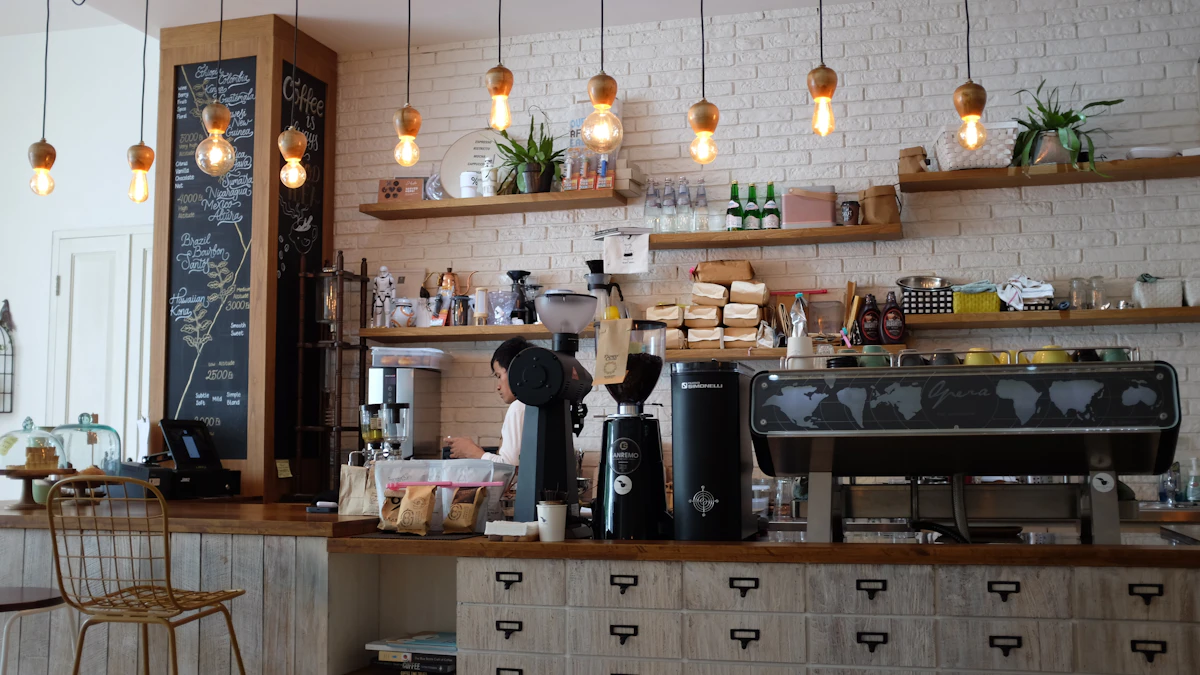
Beautifully preserved rustic heritage UK tea room interior with tiered afternoon tea, scones, loose-leaf pots and warm lighting

UK Sector Specialism · Class E (Daytime)

The UK's Specialist Broker for Tea Room Businesses

Connecting independent operators with vetted private and trade acquirers. Fully off-market. Fully protected.

Operational realities

What actually drives value in the tea room sector

Boutique tea rooms are lifestyle-driven businesses, weighted heavily toward UK tourist hubs, coastal walking routes and historic towns. They run on high gross margins on baked goods and premium loose-leaf teas, and an unusual share of them trade as freeholds — which materially uplifts asset stability for the buyer.

Benchmark valuation framework

Net Profit + Property (often Freehold) · 1.3× – 2× applied to adjusted net profit (SDE).

Trading profile

Seasonal & tourism-led

Summer and bank-holiday weekends carry the year. Strong winter cash reserves and events programming are what flatten the dip.

Gross margin (baked goods)

70%+

Home-baked cakes, scones and loose-leaf service deliver some of the strongest GP percentages in our entire taxonomy.

Tenure mix

Often freehold

Rural and tourist-trail tea rooms are commonly sold with the building included — adding a real-estate asset underneath the trading business.

Buyer profile

Lifestyle / retiring couples

The buyer pool is patient and asset-led. Trading goodwill plus property security is what closes the deal.

Take the next step — privately

Two paths into the tea room market

Whether you're planning a confidential exit or building a considered acquisition brief, every conversation is NDA-gated and never appears on a public listings portal.

For owners looking to exit

Test the value of your business before you commit to a sale

Sector-specialist valuation and a private advisor conversation — with zero exposure of your business to the open market.

Secure Your Confidential Sector Valuation →

For registered & aspiring buyers

See the tea room opportunities the open market never does

Register an acquisition brief or join the regional alert list and we'll match you against off-market businesses before they become publicly known.

Register Your Acquisition Brief →

Sector deep-dive · operator-grade analysis

Tea Room: the operational, economic and lease realities

Long-form analysis written for owner-operators considering a confidential exit and for serious acquirers building a defensible brief. No surface-level overviews; no SEO filler.

Operational profile

Day-to-day workflow in a tea room site

The UK tea room is structurally a destination business rather than a footfall one. The classic operating profile is a 28–60 seat site in a heritage town, a National Trust adjacency, a cathedral close, a coastal high street, or a Cotswold-belt village — locations where the customer arrives intending to visit, often as part of a half-day itinerary, rather than dropping in opportunistically. The trading day opens between 09:30 and 10:30 and runs to 16:30 or 17:00, with the kitchen typically closing 30 minutes before the front-of-house.

Cover dynamics are entirely different from a coffee-led or daytime-diner format. A tea room turns covers 1.6–2.4 times across a peak-season weekday and 2.0–3.0 times on a weekend, but the average ticket is materially higher: £14–£22 per cover for standard daytime trade, lifting to £28–£48 per cover for a full afternoon tea service. The dwell time is 50–90 minutes for casual covers and 90–130 minutes for afternoon tea bookings, which means the cover rotation logic is the inverse of a sandwich bar — the operator wants fewer, slower, higher-value parties, not faster ones.

The seasonality is sharp and must be planned around. A heritage-town tea room commonly takes 58–72% of annual revenue between April and October, with August and the Easter and October half-terms carrying the dominant single weeks. The November–March trough is structurally inevitable; the best operators flatten it through a Christmas afternoon-tea programme (booked from late October), a January retail-hamper push, a February local-customer loyalty scheme, and a March garden-centre or coach-trip partnership. Sites that fail to plan the trough run at a working loss for 16–22 weeks per year and rely on the summer surplus to recoup, which compresses the buyer pool because acquisition lenders treat the winter as an unfunded period.

The customer base divides into three cohorts. The largest is the discretionary leisure visitor — couples and small groups on a day trip — commonly 55–70% of summer revenue. The second is the resident-and-local-friend cohort, sustaining mid-week trade and providing the demographic backbone for the winter trough. The third is the booked group: coach parties, ladies’ club outings, walking groups, hen weekends, and (increasingly) heritage-tour operators routing through small towns and villages. Booked groups are the highest-value single revenue stream because they pre-commit covers, average ticket and time, and underpin the operator’s confidence in stocking premium ingredients without spoilage risk.

Service model is plated and seated, with handheld order capture (Lightspeed, Square, or Vantiv) increasingly common. The defining workflow is the pastry pass — the tray on which the scone, the clotted cream, the jam, the sandwich tier, and the cake-stand assembly is built from prep at the back of house to the customer’s table. Sites that have systematised pastry-pass assembly into a 9–14 minute clock from order land 92–96% of customer complaints under the “slow service” bracket; sites without that systematisation routinely land 14–22% of complaints there and bleed online ratings as a consequence.

Micro-economics

Margins, wage thresholds and waste discipline

Tea room economics are built on premium ingredients sold at a premium price into a customer who is not price-elastic at the table. The benchmark revenue split is 45–60% afternoon tea and structured set menus, 20–28% beverage (loose-leaf, specialty coffee, premium soft drinks), 12–18% cake counter and ambient, and 8–14% retail (hampers, jams, biscuits, branded teas). The blended gross margin profile is unusually attractive: afternoon tea margin at 70–78%, beverage at 78–86%, cake counter at 64–72%, and retail at 38–52%. Blended COGS sits at 24–30% of net turnover, materially lower than a traditional café.

The wage structure carries a permanent pastry overhead that other daytime formats do not. The benchmark wage:turnover ratio is 32–38% during the summer peak and frequently spikes to 44–52% during the November–March trough as fixed kitchen and front-of-house headcount runs against shrunken takings. The defensible response is a documented seasonal rota: a 6-month annual hours contract for the pastry chef that loads hours into the spring and summer; a casual-banked rotation of weekend service staff who can flex to two or three days a week through the winter; and a closure policy (commonly Tuesday and Wednesday from January through March) that removes the worst-margin days entirely.

Premium ingredient sourcing materially expands margin if executed deliberately. A scone made on a Rodda’s clotted cream pairing, with a named-supplier jam (Tiptree, Wilkin & Sons, or a local equivalent) and stoneground flour, costs the operator 22–31p per portion and sells at £5.20–£6.80 within a cream-tea service — a gross contribution of 91–95%. The same scone made on commodity ingredients costs 13–18p and sells at £3.80–£4.40 in a discount cream tea: a higher absolute margin per unit, but the brand cannot support the cake-stand assembly at £28–£36 that sits at the top of the menu.

Waste mitigation in a tea room is built around the pastry and the scone batch. A disciplined site bakes scones in 18–24 batch units across the day, calibrated against booked-cover lead time, and runs a written 16:00 cascade reducing day-baked cake-slices by 30% for the last hour. Stock rotation for cream, fresh sandwich filling and pasteurised jelly is the most common audit failure: cream past day-3 is operationally unusable and must be discarded, and a careless operator will write off 4–7% of monthly cream spend through over-purchasing.

The recurring below-line costs that buyers under-estimate are china replacement (a tea room of 36 covers will replace 8–14% of its china and glassware annually, costing £700–£1,400), linen laundry where tablecloths are used (£1,400–£2,600 a year via a contract laundry), the loose-leaf tea inventory carrying cost (£1,800–£3,200 of stock held against a 12–16 week sell-through), and the booking-platform commission (ResDiary, OpenTable, SevenRooms typically 0.6–1.4% of covered revenue).

Leasehold integrity

Class E, FRI obligations and plant assets

The single most consequential fact about tea rooms is that a meaningful share trade freehold rather than leasehold — closer to 35–45% nationally, against single-digit percentages for sandwich bars or specialty coffee shops. Where the operator owns the freehold, the valuation analysis changes shape entirely: the going-concern goodwill is priced on SDE in the 1.3×–2.0× band, and the property is valued separately as a commercial freehold (commonly 6–9% net initial yield against passing trading rent, frequently held by the same SPV or pension scheme). Buyers can acquire just the goodwill on a 15–20 year FRI lease back to the seller, or both, depending on the seller’s exit plan.

Where the tea room is leasehold, the lease itself is often unusual. Heritage-town and National Trust adjacent units commonly sit on landlord covenants tied to building conservation, opening hours, signage restrictions, and external paintwork specifications. A standard Class E pivot — the legal right to flip the unit to retail, restaurant or office without planning — may be undermined by a use restriction written into the lease that pre-dates the 2020 Town and Country Planning reform. Buyers should commission a specific solicitor’s review of the use clause; deals that assume Class E flexibility without verification routinely collapse at exchange.

Grade-listed and conservation-area buildings carry a separate compliance overlay. Any change to the shopfront, the signage, the external furniture, the rear-yard extraction termination, or the internal removal of a feature wall requires Listed Building Consent (LBC) under the Planning (Listed Buildings and Conservation Areas) Act 1990. The consent timeline is 8–14 weeks, the consent is granted to the building rather than to the operator, and unauthorised work is a criminal offence that survives every change of ownership. A buyer inheriting a tea room with un-consented internal work (a removed lath-and-plaster partition, an installed mezzanine, a non-listed-equivalent extraction) is inheriting a remediation liability, and the deal should be priced accordingly.

Insurance and risk are heavier than in other daytime formats. The buildings reinstatement value for a grade-listed property is typically 30–55% higher than for an equivalent un-listed building because reinstatement must use traditional materials and methods. Where the operator carries the buildings insurance under the FRI lease, this is a material premium line (typically £3,800–£7,200 against £1,800–£3,400 for an equivalent un-listed unit). Where the landlord carries the buildings insurance and recharges, the recharge is fixed and the operator has no negotiation room — this should be confirmed at lease review.

Kitchen plant in a tea room is dominated by the pastry section: a Rofco or Tom Chandley deck oven, a planetary mixer (Hobart H600 or Kenwood Major), a chocolate-melter or tempering unit where chocolate work features, a refrigerated patisserie display, and a tea-station with a Marco Beverage Systems brewing kit. None of this plant is particularly transferable to non-tea-room buyers, so its value at sale tracks depreciated book value rather than fair-market value — commonly 35–55% of original cost at year 5, and 18–30% at year 10.

Growth vectors

Pragmatic scaling for owner-operators

Tea rooms scale through four vectors, with different effectiveness in different physical locations. The four are extended menu architecture, retail and hamper revenue, private hire and ticketed events, and brand licensing to nearby trade.

Extended menu architecture is the most operationally efficient lever. The classic single afternoon-tea menu (sandwich tier, scone tier, cake tier, pot of tea, two hours) commonly extends to a champagne afternoon tea (+£14–£22 per cover, sold at 35–50% incremental gross margin), a savoury high-tea variant for the early evening (extending the trading day by 90 minutes and capturing a partly different customer cohort), a children’s afternoon tea at a discounted price point that converts adult-only parties into family parties, and a seasonal valentine’s, mother’s day and christmas variant. Sites that operate four or more menu variants typically lift annual revenue by 18–28% against single-menu equivalents without any change to staffing or square footage.

Retail and hamper revenue exploits the destination dynamic. A customer arriving on a half-day itinerary frequently buys gifts and souvenirs as part of the visit, and a tea room is structurally well-placed to capture that spend through a counter rack of named-supplier preserves, branded tea caddies, biscuits, marmalades, scone-mix kits, and Christmas hampers. The seasonal hamper line (October through December) commonly contributes £6,000–£28,000 of annual revenue at a blended 38–50% gross margin, and it absorbs almost no incremental floor space because the build is done in the kitchen overnight.

Private hire and ticketed events flatten the winter trough. A tea room of 30–48 covers can be hired by a single party (a wedding-tea, a baby-shower, a retirement) for a 3-hour Saturday morning slot at £1,200–£2,800 with food-and-beverage bolt-ons, all of which transact at the upper margin of the menu. Ticketed events (a literary morning, a craft workshop, a Christmas-baking demonstration) commonly sell out 18–28 ticketed seats at £28–£48 per ticket and run at 60–72% gross margin once the demonstrator’s fee or the speaker’s gift is accounted for.

Brand licensing to nearby trade is the most under-exploited vector in the sector. A tea room with a defensible local brand can wholesale its scones, cake-slices, jams and biscuits to local hotels, B&Bs, gift shops, garden centres and visitor attractions on a documented wholesale rate. A mature wholesale book of £800–£2,400 weekly is a separately monetisable asset at sale, commonly trading at 6–9× monthly contribution, and the production is absorbed into the existing kitchen rota during the morning prep window.

Delivery aggregators (Deliveroo, Uber Eats) typically do not work for tea rooms. The category is built on a seated, plated, ceremonial experience, and the product does not survive a 22-minute aggregator ride: scones go cold, clotted cream separates, and sandwich finger-tiers compress. Operators who experiment with delivery routinely conclude within a quarter that the category cannibalises the in-room experience without adding margin, and exit.

Sector FAQs · expert-level answers

Tea Room brokerage: deep operator questions answered

How is winter seasonality factored into the valuation of a UK tea room?+

Sophisticated acquirers and acquisition lenders model the 12-month trading cycle separately, not just the annual headline. A site that takes 58–72% of annual revenue between April and October is treated as carrying a 16–22 week unfunded operating period during which fixed costs (rent, freeholder service charges, base wages, utilities, insurance) continue without proportionate revenue. The defensible response from a seller is to present a written winter plan in the information memorandum: closure days for January–February, a documented Christmas booking pipeline carried forward into the new ownership, an evidenced hamper revenue tail, and a January–March retail-cashflow projection that demonstrates the trough is bridged operationally rather than from the summer overflow. Sites that present this plan transact at the upper third of the SDE multiple band; sites that present a single annual P&L with no seasonal decomposition routinely settle 8–14% below comparable trading numbers.

How does a freehold tea room get valued versus a leasehold one?+

A freehold tea room is valued as two discrete assets that happen to be co-located: the going-concern goodwill (priced as SDE × 1.3–2.0) and the commercial freehold property (priced on net initial yield of 6–9% against a notional market rent, or on £/sqft against local commercial-property comparables). The two values are summed and the buyer can structure the acquisition in three ways — buy both into the same SPV, buy goodwill only on a 15–20 year FRI lease back to the seller (who retains the freehold as a pension asset), or buy the property only via a separate SIPP/SSAS structure and lease it to the operating buyer. A typical Cotswold or Lake District freehold tea room transacts at £420,000–£980,000 across goodwill and property, with the property share commonly 55–70% of the total. A leasehold-only equivalent transacts at £80,000–£280,000 of goodwill alone.

Does my tea room need Listed Building Consent for an extraction or signage change?+

If the building is statutorily listed (Grade II, II*, or I in England, or the equivalent A/B/C in Scotland and Wales) or sits within a conservation area, the answer is almost certainly yes for any external alteration. Listed Building Consent (LBC) is required for any work that affects the special architectural or historic interest of the building — this routinely captures extraction terminations, external flue penetrations, signage of any kind (illuminated or not), shopfront paint colour changes that depart from the conservation-area palette, and any alteration to internal features (fireplaces, panelling, lath-and-plaster, original floor coverings). The consent timeline is 8–14 weeks via the local planning authority's conservation officer, the consent runs with the building rather than the operator, and unauthorised work is a criminal offence under the Planning (Listed Buildings and Conservation Areas) Act 1990 that survives every change of ownership. Buyers should commission a written conservation-context check before exchange; finding un-consented historic work at exchange is the single most common reason a heritage-tea-room deal collapses.

How is historical turnover weighted when valuing an established tea room with multi-generational lineage?+

Multi-generational lineage adds value, but the discipline is in how it's evidenced rather than asserted. The defensible analysis is to present a rolling 5-year trading dataset (revenue, gross margin, cover count, average ticket, online reputation across TripAdvisor / Google / SquareMeal) and a written brand-narrative document that traces the unbroken trading history with photographic, signage, and local-press evidence. Where the lineage demonstrably underwrites the catchment — a brand customers travel specifically to visit, a name that appears in regional guidebooks, a heritage trail listing — the goodwill multiple typically lifts by 0.2–0.4×. The trap is that lineage is treated as personal goodwill: where the existing operator is the great-grandchild of the founder and is personally synonymous with the brand, the buyer prices a 14–22% lineage-discount because the personality cannot be transferred. The structural fix is a written 6–18 month handover during which the existing operator gradually steps back from front-of-house while the buyer is publicly visible at the brand.

Can I add a wood-fired oven or alcohol service to my tea room under the existing lease?+

Both changes require checks against three layers of authority. The wood-fired oven engages building regulations (any new flue penetrating a roof or wall needs compliance sign-off), the landlord (a wood-fired oven materially alters the buildings insurance risk profile and almost always requires written consent under an FRI lease), and the local environmental health officer (smoke nuisance to neighbours is the most common complaint route). Alcohol service requires a Premises Licence under the Licensing Act 2003 — the operator becomes the Premises Licence Holder and must nominate a Designated Premises Supervisor (DPS) who holds a Personal Licence. The licence application takes 4–6 weeks via the local licensing authority, costs £100–£635, and is subject to local representations from residents and the police. In a conservation area or grade-listed building, both changes may also require Listed Building Consent (for the oven structure) or planning consent (for an opening-hours extension into the evening). Sellers should disclose any unauthorised version of either change at the IM stage; buyers price either undisclosed change as a £4,000–£18,000 deferred liability.

What percentage of a tea room's customer base typically transfers to a new owner?+

Operationally, 75–90% of the recurring local customer base transfers cleanly because customers are visiting the building, the brand, and the menu rather than the individual operator behind the counter. The discretionary leisure cohort — coach trips, day-trippers, guidebook visitors — transfers near-fully because they are buying a location and an experience, not a relationship. The cohort that doesn't transfer is the personal-relationship customer: regulars who are friends of the family, who specifically asked for the existing owner by name, and who supported community events the owner ran personally. That cohort typically represents 10–22% of trading goodwill and the recovery time is 2–4 trading quarters. The defensible structure is for the buyer to negotiate a 12–20 week post-completion handover during which the existing owner is visibly present in front-of-house for 2–3 days a week, with a documented introduction to the booked-group contact list, the local press, and the heritage-tour operators routing through the town. Where this handover is contractually written into the SPA, customer churn typically lands at 8–14% within the first year; without it, churn commonly runs 18–32%.

Pillar guides for tea room operators

Flat-lay of a ceramic coffee cup, notepad and pen on a warm wooden desk — preparing a UK café valuation
Traditional cafe26 min read

The Master Guide to Valuing a Café or Coffee Shop in the UK

A long-form, owner-first valuation playbook covering Adjusted Net Profit (EBITDA) add-backs, the eight fixed-premises taxonomy frameworks, lease-length mechanics under the 1954 Act, realistic 2026 multiplier ranges, and the deflators that quietly cut six figures off an asking price.

Read guide →
Architectural facade of an independent UK boutique café on a quiet British high street
Bistro cafe14 min read

Navigating Class E Commercial Leases and Assignments for Cafe Owners

A working-owner's guide to Class E use, FRI lease liabilities, the Licence to Assign process, AGAs, rent reviews and the practical decisions that protect value when transferring a café leasehold.

Read guide →
Display of fresh artisan pastries inside the curved glass counter of a UK independent café
Traditional cafe12 min read

Café Rent Reviews & Lease Renewals — An Owner's Plain-English Guide

How upward-only rent reviews, the Landlord and Tenant Act 1954 renewal mechanism, surrender premiums and lease re-gears actually work — and the eighteen-month playbook independent café owners use to walk into negotiations from a position of strength.

Read guide →
Warm café lighting with steam rising from an espresso machine — the unmistakable atmosphere of a UK independent operator
Specialty coffee shop13 min read

The Broker Firewall: How to Sell Your Hospitality Business with Total Confidentiality

A working guide to confidential, off-market disposal — the real cost of public leaks, the matchmaking blueprint we use for trade and corporate buyers, when blind portal profiles still serve smaller assets, and how vetting and NDAs are layered to protect goodwill.

Read guide →
Organised behind-the-counter workspace inside an independent UK café — tools, tickets and prep stations laid out
Tea room13 min read

The Café Owner's Practical Guide to TUPE Regulations and Staff Transfers

A plain-English, working-owner's guide to TUPE — what automatically transfers with the business, the consultation timeline, the strict limits on post-sale contract changes, and the realistic handling of zero-hour contracts, refusals to transfer and pre-existing disciplinary issues.

Read guide →
Top-down latte art in a flat white — the daily cup-quality a UK café buyer is acquiring on day one
Traditional cafe14 min read

How to Buy a Café in the UK — A First-Time Buyer's Playbook

A practical, honest playbook for first-time UK café buyers covering realistic budgets, deposits, lender expectations, viewing red flags, due diligence priorities and what actually happens in the first ninety days after completion.

Read guide →
Stack of accounts paperwork beside a ceramic mug of black coffee at a UK café owner's kitchen table
Traditional cafe13 min read

The Café Buyer's Due Diligence Checklist — A 2026 UK Playbook

A practical, line-by-line due diligence checklist for UK café buyers covering the lease, accounts, EPOS data, staff, equipment, licensing, food hygiene, supplier contracts and the small details that quietly decide whether a deal becomes a good business or an expensive mistake.

Read guide →

Other UK fixed-premises sectors

Boutique & Traditional Tea Room: Traditional afternoon tea room for sale UK · lifestyle business tourist hotspot · boutique tea room freehold