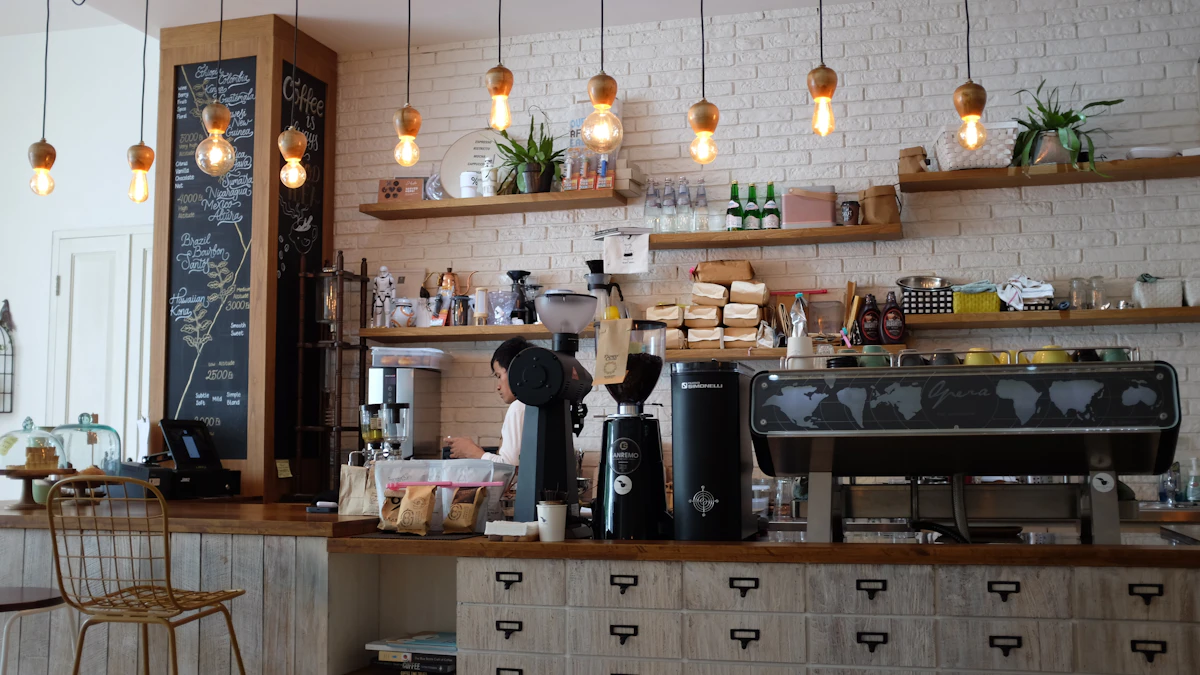
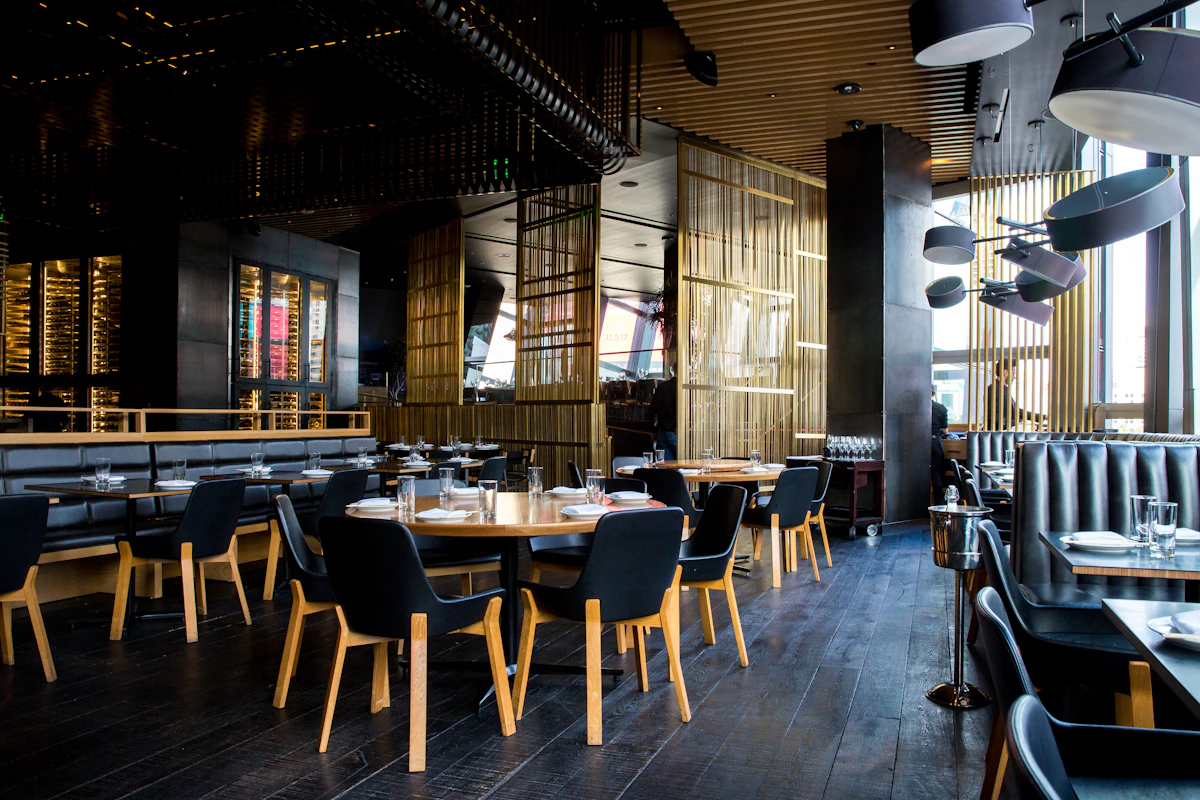
Romantic ambient evening UK bistro interior with set tables, wine glasses catching the warm light and intimate cover layout

UK Sector Specialism · Class E (Licensed)

The UK's Specialist Broker for Bistro & Small Eatery Businesses

Connecting independent operators with vetted private and trade acquirers. Fully off-market. Fully protected.

Operational realities

What actually drives value in the bistro & small eatery sector

Bistro cafés are premium casual-dining hybrids — bridging day-to-day coffee culture with licensed afternoon and evening wine and small-plates trade. They operate under flexible Class E use, but the trading uplift hinges on a valid premises alcohol licence and a disciplined focus on average spend per cover.

Benchmark valuation framework

Average Cover Spend · 1.5× – 2.3× applied to adjusted net profit (SDE).

Trading model

Daytime → evening hybrid

Coffee and brunch in the AM, small plates and wine in the PM. Two distinct margin profiles under one Class E roof.

Licence dependency

Premises + personal

The premises licence transfers with the sale, but the buyer (or their manager) must hold a Personal Licence to serve alcohol legally.

Valuation driver

Average spend per cover

Licensed sites push spend-per-head materially higher than dry venues — the single biggest lever on the multiple.

Capacity economics

Turning rate

Weekend cover turnover (how many times you rotate tables per service) is what tells a buyer the realistic profit ceiling.

Take the next step — privately

Two paths into the bistro & small eatery market

Whether you're planning a confidential exit or building a considered acquisition brief, every conversation is NDA-gated and never appears on a public listings portal.

For owners looking to exit

Test the value of your business before you commit to a sale

Sector-specialist valuation and a private advisor conversation — with zero exposure of your business to the open market.

Secure Your Confidential Sector Valuation →

For registered & aspiring buyers

See the bistro & small eatery opportunities the open market never does

Register an acquisition brief or join the regional alert list and we'll match you against off-market businesses before they become publicly known.

Register Your Acquisition Brief →

Sector deep-dive · operator-grade analysis

Bistro & Small Eatery: the operational, economic and lease realities

Long-form analysis written for owner-operators considering a confidential exit and for serious acquirers building a defensible brief. No surface-level overviews; no SEO filler.

Operational profile

Day-to-day workflow in a bistro & small eatery site

The UK bistro eatery is a hybrid daytime-into-evening hospitality format that operates a brunch-and-lunch service alongside a licensed evening trade. The classic site opens at 09:00 or 10:00 for brunch, runs lunch from 12:00 to 15:00, holds a small afternoon coffee-and-cake window from 15:00 to 17:00, and reopens for evening bistro service from 17:30 to 22:00 (often to 22:30 Friday-Saturday). The dual trading windows are operationally distinct — different menu, different staffing, different average ticket — and the operator must manage two service models in a single physical site.

Cover dynamics shift meaningfully across the day. Daytime brunch and lunch trade turns covers 1.8–2.6 times across the 5-hour window, with average tickets at £14–£22 and a customer base skewed to local workers, residents, parents-with-children, and discretionary brunch parties. Evening trade turns covers 1.4–2.0 times across the 4-hour window, with average tickets at £28–£58 (lifted materially by alcohol service) and a customer base skewed to couples, friend-groups, and small business dinners. The structural insight is that the evening trade carries 2–3× the per-cover revenue of the daytime trade at broadly comparable fixed-cost loading, which is why operators routinely defend evening trading even when daytime demand would justify a smaller, simpler operation.

The customer base typology divides into three cohorts. The daytime regulars (commonly 35–50% of daytime revenue) are local residents and workers visiting 1–3 times weekly for brunch, lunch or coffee-and-cake. The discretionary daytime (commonly 30–45%) is the weekend brunch trade, the parents-with-pushchairs cohort, and the meeting-and-laptop crowd. The evening cohort (commonly 90–100% discretionary) books in advance (40–75% of evening covers are pre-booked via OpenTable, ResDiary, or SevenRooms), travels further than the daytime catchment radius, and is more sensitive to menu quality and atmosphere than to price.

The premises licence and Designated Premises Supervisor structure governs everything related to alcohol service. The operator holds the Premises Licence under the Licensing Act 2003; a named individual on staff holds the Personal Licence and is registered as the Designated Premises Supervisor (DPS); the licence covers specific licensable activities (the sale of alcohol, late-night refreshment, regulated entertainment) within specified hours; and the licence is subject to the conditions imposed at grant (commonly including a CCTV requirement, a noise-management plan, and a staff-training programme on responsible service).

The operational workflow that determines whether the evening service is profitable is the kitchen-to-front-of-house communication: a single ticketing system (Square for Restaurants, Lightspeed Restaurant, or Toast) capturing each table order and presenting it as a kitchen display screen ticket; a clearly demarcated pass with a single expediter calling each course; and a dedicated front-of-house lead managing the dining-room flow against the kitchen’s production capacity. Sites with this discipline routinely sustain 75–110 evening covers across the 4-hour service; sites without it cap at 50–75 covers and bleed margin to plating-line ticketing errors.

Micro-economics

Margins, wage thresholds and waste discipline

Bistro eatery economics are dominated by the dual-channel revenue split and the alcohol-uplift on average cover spend. The benchmark revenue split is 35–48% daytime food (brunch, lunch, light bites), 28–42% evening food (mains, starters, desserts), 18–28% alcohol (wine, cocktails, beer), and 4–10% beverage (coffee, soft drinks, hot drinks). Food gross margin sits at 64–72% on daytime trade and 60–68% on evening mains. Alcohol gross margin is materially higher: 64–72% on bottled wine sold by the glass, 70–78% on house spirits, 75–82% on draught beer, and 76–85% on cocktails. Blended COGS for a well-run unit is 32–38% of net turnover.

Average cover spend on the evening service is where the format earns its valuation premium. The 2–3× ticket uplift over daytime trade is structural: a customer ordering a starter, a main, a glass of wine and a coffee at evening service spends £38–£52 against a customer ordering a brunch plate and a coffee at £14–£22 on daytime trade. The operator captures that uplift across the same physical site, the same kitchen plant, and largely the same staff base (with evening-shift premium loadings), which means the marginal contribution per cover on evening service is materially higher than the daytime equivalent.

Wages are structurally heavier than in pure-daytime formats because the operation carries two service rotas. The benchmark wage:turnover ratio for a bistro eatery is 30–38%, with the daytime kitchen and front-of-house running 16–22% and the evening kitchen and front-of-house running 14–18%. The evening shift commonly carries a 10–18% premium against the daytime hourly rate to support recruitment and retention in a market where evening shift work is in declining supply. The 2024–2025 NLW uplift to £12.21/hr has pushed evening wage costs up 2–4 percentage points; smart operators have rebalanced by lifting evening main-course prices £1.50–£3.00 across the menu rather than absorbing the wage rise.

Alcohol stock management is the discipline that separates well-run bistros from poorly-run ones. The defensible structure is: a written wine list with calculated GP% on every line at the chosen sell price; a 4–6 week wine inventory turn cycle (faster turn means less working capital tied up, but tighter ordering); a documented house-spirits par level rebuilt against weekly trade; and a digital pour-tracking system (Berg, BarVision, or comparable) that monitors actual versus theoretical pours on the bar. Sites that operate this discipline run alcohol gross margins 4–7 percentage points above the unmanaged baseline, which alone is worth £14,000–£38,000 of annual gross margin on a serious bistro operation.

Below-line, the recurring costs that catch buyers are the Premises Licence annual fee (£180–£635 depending on rateable-value band), the public-music licence (PPL/PRS at £480–£1,400 a year), the OpenTable / ResDiary / SevenRooms booking platform fees (commonly 0.6–1.4% of pre-booked revenue or a fixed monthly tier at £200–£480), the wine-importer credit-line interest where the operator carries wine stock on extended terms, and the higher commercial insurance specification driven by alcohol service and evening trading.

Leasehold integrity

Class E, FRI obligations and plant assets

Bistro eateries sit under Class E in 2025, with the daytime trade accommodated cleanly. The evening service introduces a Premises Licence overlay that other Class E daytime formats do not require. The Premises Licence under the Licensing Act 2003 is separate from the Class E planning consent and governs the operator’s right to sell alcohol, provide late-night refreshment, and host regulated entertainment within specified hours.

Transferring the Premises Licence is one of the most consequential single steps in a bistro eatery sale. The licence is held by a named legal entity (typically the operating company), and the transfer to a buyer requires either: (1) the buyer acquires the operating company itself (a share sale, which automatically retains the Premises Licence in the now-buyer-owned company), or (2) the buyer applies to the licensing authority for a transfer of the Premises Licence in their own name (an asset sale, which requires a formal transfer application taking 14–28 days). The DPS (Designated Premises Supervisor) is a separately appointed individual with a Personal Licence, and a change of DPS requires a separate variation application. Sellers should disclose the licence holder and the DPS at the IM stage; deals frequently structure around a continuity arrangement where the existing DPS stays in role for 60–120 days post-completion to bridge the buyer’s recruitment of a replacement.

The trading-hours condition under the Premises Licence is the most consequential negotiating lever. A licence permitting alcohol service to 22:30 supports a meaningfully different evening trading model than one permitting service to 00:00. Buyers should verify the actual hours in the licence (not just the operational hours the seller is using) and check for any associated conditions: residents’ representations during the original grant, a noise-management plan that requires specific operational steps, a CCTV condition with retention obligations, or a smoking-area condition that constrains the outside trading area. Restrictive conditions that compress trading flexibility are commonly worth 6–14% of goodwill at sale.

The kitchen extraction system is structurally heavier than in coffee-led or sandwich-bar formats. An evening bistro service typically requires a Class 1 mechanical extraction hood (canopy hood with grease filters) over the main cook-line, certified to BS EN 16282 and serviced under TR19 (Specification for the Cleanliness of Ventilation Systems) at minimum annually. The extraction termination must be at a height that does not cause nuisance to residential neighbours, and where the operator has installed evening trade above a baseline daytime operation, the extraction may require uprating — a process requiring landlord consent, possible Listed Building Consent in conservation areas, and an electrical-supply upgrade.

Insurance is materially heavier than in daytime-only formats. Standard public liability at £5m and product liability cover commonly run £1,800–£3,400. A separate licensee’s liability rider covering alcohol-service-related claims adds £600–£1,400. Where the operator hosts regulated entertainment (live music, DJ sets) the rider further increases. Buildings reinstatement for a bistro with full evening service and a fully fitted kitchen commonly runs £3,400–£7,200 a year. Total commercial insurance for a serious bistro eatery operation lands at £6,400–£12,000 annually.

FRI lease compliance is heavier across all axes: cook-line plant under tenant repairing covenant, refrigeration plant (commonly 4–8 commercial units across cold-room, undercounter prep, and wine fridge), extraction system, plus the alcohol-service plant (taps, beer-cooler, ice machine, dishwasher). Total kitchen plant at depreciated value for a serious bistro is typically £38,000–£96,000.

Growth vectors

Pragmatic scaling for owner-operators

Bistro eateries scale through four operationally distinct vectors. The four are evening-cover yield management, private-hire and event programming, daytime-channel diversification, and a documented multi-site model.

Evening-cover yield management is the single highest-impact operational discipline available to the format. The defensible structure mirrors restaurant-yield management: a written booking-policy distinguishing prime slots (19:00–21:00 Friday and Saturday) from shoulder slots (17:30–19:00 and 21:00–22:00 across all days); a 90-minute minimum dwell-time on prime slots with explicit communication to the customer at booking; a 120-minute maximum dwell on the shoulder slots; and a tactical use of pre-booking deposits (commonly £15–£25 per person on Friday and Saturday prime, held against the final bill) that reduce no-shows from 8–14% to 2–4%. Sites that operate yield management rigorously routinely lift evening covers 18–28% over the same 4-hour service window, with the uplift falling almost entirely to incremental margin.

Private-hire and event programming exploits the dual-trading-window structure. The defensible cadence is: 2–4 private-hire events per quarter (typically Sunday evenings when the bistro is closed for regular service, or Tuesday early-evenings when daytime trade is thin), commonly at £1,800–£6,800 per booking with food-and-beverage bolt-ons; a programmed seasonal calendar (a Christmas-period wine-dinner series, a Valentine’s seven-course tasting menu, a summer terrace launch, a regional-supplier dinner pairing with a named producer) that markets the bistro to a higher-spend customer cohort; and a small corporate-hire offering for nearby businesses hosting director or client dinners.

Daytime-channel diversification mitigates the structural risk of carrying evening overhead on weak daytime demand. The defensible additions are: a brunch-and-meeting-room offer marketed to nearby freelance and small-business customers (often a coworking-style 09:00–14:00 menu with a small private room available); a weekend brunch package (a 2-hour seated brunch with a single cocktail or coffee included at a fixed price); a Sunday-roast service that converts the lowest-margin daytime trading day into the highest-margin daytime day; and a children’s menu structured to make the daytime weekend trade explicitly family-friendly.

A documented multi-site model is the structural separator between independent bistro operators (transacting at 1.5–2.0× SDE) and small-group acquirers (transacting at 2.0–2.4× SDE or, where presented as EBITDA, at 3.4–4.4× adjusted EBITDA). The required documentation is the operational manual covering: kitchen prep specifications and recipe book; supplier roster with negotiated rates; wine list rationale and supplier relationships; staff training programme covering service standards, wine knowledge, and responsible-alcohol-service training; payroll structure and shift rotation templates; and a P&L template that maps to the existing site within tight variance. Operators with this documentation transact at the upper end of the band.

Delivery aggregators are a tactical layer in this format rather than a strategic vector. The category compresses evening cover ticket sizes (delivery tickets are typically 22–38% smaller than dine-in equivalent), and the aggregator commission of 28–33% compresses the evening food margin to single-digit gross on plated mains. Smart operators run a curated daytime-only delivery menu (brunch plates, salads, sandwich-and-soup combinations) that fills the post-lunch trough without disturbing the evening service.

Sector FAQs · expert-level answers

Bistro & Small Eatery brokerage: deep operator questions answered

How do I transfer a Premises Licence when selling a UK bistro eatery?+

The transfer mechanism depends on the deal structure. In a share sale (the buyer acquires the operating company in its entirety), the Premises Licence automatically remains with the now-buyer-owned company without a separate licensing application — the licence is held by the legal entity, not by the individuals, so a change of shareholders does not change the licence holder. In an asset sale (the buyer acquires the trading goodwill and assets but not the company itself), the buyer must apply to the local licensing authority for a transfer of the Premises Licence to a new named holder, typically the buyer's new operating company. The application is made on a standard form to the licensing authority, costs £23, is subject to a 14-day police-notification period during which the police can object, and is typically granted within 14–28 days. The Designated Premises Supervisor (DPS) is a separately appointed individual who holds a Personal Licence; the buyer either nominates an existing member of staff who already holds a Personal Licence, or commissions a new Personal Licence application (a 6–12 week process via the licensing authority with a national accredited training qualification at £180–£280). Deals routinely structure a 60–120 day continuity arrangement where the existing DPS remains in role until the buyer's nominated DPS is appointed.

What is the role of the Designated Premises Supervisor in a bistro sale?+

The DPS is the licensing-system's named individual responsible for the day-to-day supervision of licensable activities at the premises. Under the Licensing Act 2003, every Premises Licence authorising the sale of alcohol must nominate a DPS, and the DPS must hold a current Personal Licence — a separate licence granted to an individual after they complete the Award for Personal Licence Holders (APLH) qualification and pass a basic-disclosure background check. The DPS does not need to be on-site at all times, but is the named individual the licensing authority and the police will contact for any compliance issue, and is the person whose name appears on the licence summary required to be displayed publicly at the premises. At sale, the seller must disclose who the current DPS is, whether the DPS is an employee or the seller themselves, and what the continuity arrangement is. The buyer needs to either (a) retain the existing DPS through a continuity period, (b) nominate an existing member of staff who already holds a Personal Licence to become the new DPS via a variation application (£23, 14-day police notification), or (c) commission a new Personal Licence for a nominated individual ahead of completion. Failing to manage this transition cleanly is one of the most common causes of post-completion licensing compliance failures.

How do I model the evening versus daytime cover split when valuing a bistro eatery?+

The defensible analysis is to decompose revenue and contribution margin by service period, then sum the two. The daytime service typically generates 38–52% of weekly revenue at a contribution margin of 22–32% after wages, COGS and channel costs. The evening service typically generates 48–62% of weekly revenue at a contribution margin of 28–38% after the same lines (the higher margin reflects the alcohol-service mix and the higher average cover spend). The two services share the same fixed costs (rent, rates, utilities, insurance, software, depreciation), but the marginal contribution per cover and per hour is materially higher on the evening service. At valuation, the multiplier is applied to the blended trading rather than to each service separately, but acquirers diligence the split to confirm operational health: a bistro running 75%+ of revenue through evening trade is structurally exposed to any future trading-hours restriction (a Premises Licence variation by neighbours, a noise complaint, a planning condition tightening); a bistro running 75%+ through daytime is operationally a café and should be valued accordingly at the lower SDE multiple. The healthy split is 35:65 to 50:50 daytime:evening, and sites within that range commonly transact at the upper end of the format's multiplier band.

How do bistro layout acoustics affect customer experience and reviews?+

Acoustics are one of the most commonly under-recognised drivers of evening review scores. A hard-surface dining room (exposed brick, polished concrete floors, plate-glass windows, metal-frame furniture, hard timber tabletops) commonly hits 75–85 dB at peak evening service — a sound level at which customers must raise voices to be heard at their own table, which compresses dwell time, suppresses alcohol re-orders, and generates a measurable cohort of 3-and-4-star reviews mentioning 'too loud' or 'couldn't have a conversation.' A soft-furnished dining room (upholstered banquettes, fabric-curtained windows, acoustic ceiling panels, rugs over hard floors) commonly hits 62–70 dB at peak service — a level at which customers dwell longer, order more drinks, and write reviews mentioning atmosphere positively. The acoustic retrofit cost for a typical bistro is £4,000–£18,000 (acoustic ceiling baffles, banquette upholstery, rugs, fabric panels), and the documented evidence is that the investment recovers within 8–14 months through extended dwell, higher per-cover alcohol revenue, and improved review-driven booking conversion. At sale, sites with documented acoustic management commonly carry a 4–8% goodwill premium over comparable sites with poor acoustics.

How are bistro wine lists and wine stock valued at sale?+

Wine stock is valued separately from goodwill at completion through the same inventory-firm mechanism used for deli-café SIT — commonly Venners or Lockharts conducting a SKU-by-SKU at-cost valuation. The wine list itself is treated as goodwill rather than as a separately monetisable asset, but a well-constructed wine list materially affects the goodwill multiple. The defensible documentation is: a written wine list with the GP% calculated on every line at the chosen sell price; a documented relationship with 2–4 named wine suppliers (Liberty Wines, Hallgarten, Berkmann, Boutinot, Lay & Wheeler, Corney & Barrow, OW Loeb, regional importers like Vintner Systems or Awin Barratt Siegel) with current trading terms; a documented house-wine selection that earns the highest gross margin (commonly 68–76%) and serves as the volume backbone; and a documented annual list-refresh cadence that keeps the offering relevant. Wine stock typically transacts at £8,000–£32,000 at completion depending on the depth of the list and the trading volume. Sites with documented sommelier or wine-buyer training transferred at completion typically transact at the upper end of the bistro multiplier band because the buyer can underwrite the wine-margin contribution without rebuilding the supplier relationships from scratch.

Should I sell my bistro eatery as a share sale or an asset sale?+

The choice has tax, licensing, and lease consequences. A share sale (the buyer acquires the operating company in its entirety) is structurally simpler from a licensing perspective — the Premises Licence remains with the company, the supplier contracts and the lease typically transfer automatically (subject to any change-of-control clauses), and the staff TUPE across automatically. The trade-off is tax: the seller pays Capital Gains Tax on the share-sale proceeds (potentially qualifying for Business Asset Disposal Relief at 14% in 2025–26, rising to 18% from April 2026, capped at £1m lifetime gain) but inherits the historic corporate liabilities of the company (tax positions, employment claims, supplier disputes, latent contractual breaches). An asset sale (the buyer acquires the trading goodwill, assets, and possibly the lease but not the company itself) is licensing-heavier (Premises Licence transfer application, possibly DPS variation, possibly lease assignment requiring landlord consent) and TUPE-heavier (formal employee consultation and transfer process) but cleaner on historic-liability exposure for the buyer. The realistic decision is informed by the company's clean-liability profile: a bistro with 6+ years of clean trading, no employment disputes, and a clean tax position commonly transacts as a share sale; one with any meaningful historic liability typically transacts as an asset sale. Both seller and buyer should commission tax-structured advice from an accountant familiar with hospitality M&A before committing to the deal structure.

Pillar guides for bistro & small eatery operators

Flat-lay of a ceramic coffee cup, notepad and pen on a warm wooden desk — preparing a UK café valuation
Traditional cafe26 min read

The Master Guide to Valuing a Café or Coffee Shop in the UK

A long-form, owner-first valuation playbook covering Adjusted Net Profit (EBITDA) add-backs, the eight fixed-premises taxonomy frameworks, lease-length mechanics under the 1954 Act, realistic 2026 multiplier ranges, and the deflators that quietly cut six figures off an asking price.

Read guide →
Architectural facade of an independent UK boutique café on a quiet British high street
Bistro cafe14 min read

Navigating Class E Commercial Leases and Assignments for Cafe Owners

A working-owner's guide to Class E use, FRI lease liabilities, the Licence to Assign process, AGAs, rent reviews and the practical decisions that protect value when transferring a café leasehold.

Read guide →
Display of fresh artisan pastries inside the curved glass counter of a UK independent café
Traditional cafe12 min read

Café Rent Reviews & Lease Renewals — An Owner's Plain-English Guide

How upward-only rent reviews, the Landlord and Tenant Act 1954 renewal mechanism, surrender premiums and lease re-gears actually work — and the eighteen-month playbook independent café owners use to walk into negotiations from a position of strength.

Read guide →
Warm café lighting with steam rising from an espresso machine — the unmistakable atmosphere of a UK independent operator
Specialty coffee shop13 min read

The Broker Firewall: How to Sell Your Hospitality Business with Total Confidentiality

A working guide to confidential, off-market disposal — the real cost of public leaks, the matchmaking blueprint we use for trade and corporate buyers, when blind portal profiles still serve smaller assets, and how vetting and NDAs are layered to protect goodwill.

Read guide →
Organised behind-the-counter workspace inside an independent UK café — tools, tickets and prep stations laid out
Tea room13 min read

The Café Owner's Practical Guide to TUPE Regulations and Staff Transfers

A plain-English, working-owner's guide to TUPE — what automatically transfers with the business, the consultation timeline, the strict limits on post-sale contract changes, and the realistic handling of zero-hour contracts, refusals to transfer and pre-existing disciplinary issues.

Read guide →
Top-down latte art in a flat white — the daily cup-quality a UK café buyer is acquiring on day one
Traditional cafe14 min read

How to Buy a Café in the UK — A First-Time Buyer's Playbook

A practical, honest playbook for first-time UK café buyers covering realistic budgets, deposits, lender expectations, viewing red flags, due diligence priorities and what actually happens in the first ninety days after completion.

Read guide →
Stack of accounts paperwork beside a ceramic mug of black coffee at a UK café owner's kitchen table
Traditional cafe13 min read

The Café Buyer's Due Diligence Checklist — A 2026 UK Playbook

A practical, line-by-line due diligence checklist for UK café buyers covering the lease, accounts, EPOS data, staff, equipment, licensing, food hygiene, supplier contracts and the small details that quietly decide whether a deal becomes a good business or an expensive mistake.

Read guide →

Other UK fixed-premises sectors

Small Eatery & Bistro Café: Licensed bistro cafe for sale UK · small eatery business · casual dining cafe