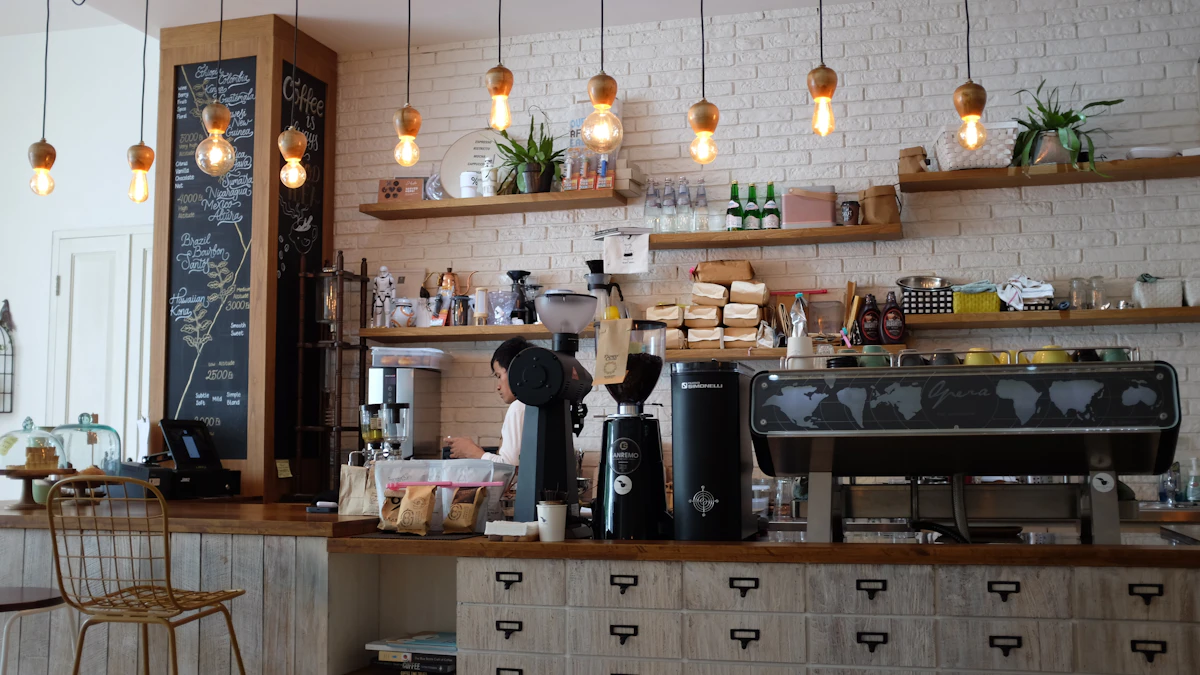
High-end UK delicatessen interior with artisan oils, cheese cases and shelved produce adjacent to casual seated café tables

UK Sector Specialism · Class E (Dual Retail)

The UK's Specialist Broker for Deli & Farm Shop Café Businesses

Connecting independent operators with vetted private and trade acquirers. Fully off-market. Fully protected.

Operational realities

What actually drives value in the deli & farm shop café sector

Delis and farm-shop cafés enjoy exceptional dual-revenue resilience: ambient and chilled retail grocery sales sit alongside high-margin sit-down deli platters and premium coffee. The complexity is inventory — stock rotation and specialty cheese spoilage demand mature EPOS history if a buyer is to trust the underlying margins.

Benchmark valuation framework

Gross Margin on Retail vs Food · 1.5× – 2.2× applied to blended retail and food margin.

Revenue structure

Retail + seated café

Two trading lines under one roof. The retail GP underwrites the seating, and the seating drives the retail dwell time.

Resilience driver

Premium takeaway food

When discretionary eating-out dips, the retail line typically picks up the slack — a natural counter-cyclical buffer.

Inventory discipline

EPOS-led

Chilled-cheese, charcuterie and artisan-oil spoilage make documented stock-rotation data non-negotiable for buyer trust.

Stock handling at sale

SAV at completion

Stock-at-valuation is independently counted the night before completion and paid for separately at cost — never bundled into the headline price.

Take the next step — privately

Two paths into the deli & farm shop café market

Whether you're planning a confidential exit or building a considered acquisition brief, every conversation is NDA-gated and never appears on a public listings portal.

For owners looking to exit

Test the value of your business before you commit to a sale

Sector-specialist valuation and a private advisor conversation — with zero exposure of your business to the open market.

Secure Your Confidential Sector Valuation →

For registered & aspiring buyers

See the deli & farm shop café opportunities the open market never does

Register an acquisition brief or join the regional alert list and we'll match you against off-market businesses before they become publicly known.

Register Your Acquisition Brief →

Sector deep-dive · operator-grade analysis

Deli & Farm Shop Café: the operational, economic and lease realities

Long-form analysis written for owner-operators considering a confidential exit and for serious acquirers building a defensible brief. No surface-level overviews; no SEO filler.

Operational profile

Day-to-day workflow in a deli & farm shop café site

A UK deli or farm-shop café is a dual-revenue operation engineered around two physically interleaved trading lines: an artisan retail counter selling cured meats, cheeses, oils, preserves, baked goods and ambient grocery; and a seated café operating cold-plate platters, hot daily specials, soups, sandwiches and a beverage range. The two trading lines share floor space, share staffing, share point-of-sale infrastructure, and share customer footfall — and the operational discipline of a successful deli-café lies in managing the relationship between them rather than treating them as independent businesses.

The trading day typically runs 08:00 to 17:30 weekday and 09:00 to 18:00 weekend, with the retail counter open the full window and the cafe seated service running a slightly compressed 09:00–16:30 window. Cover dynamics are structurally different from a coffee shop or a sandwich bar: a deli-café turns covers 1.6–2.4 times across a weekday and 2.4–3.2 times on a Saturday, with average tickets at £14–£24 for seated covers and £18–£48 for retail baskets. A meaningful share of customers visit for both: a seated lunch followed by a retail basket on the way out is the single most valuable transaction type, commonly worth £32–£68 in a single visit.

The customer base is structurally affluent and discretionary. A deli-café in a market town, an affluent suburban high street, a farm-shop adjacency, or a rural tourism corridor draws a customer cohort with a willingness to pay 1.5–2.4× the equivalent supermarket grocery basket for provenance, quality, and the social experience of the visit. Repeat behaviours dominate the weekday trade: 50–65% of weekday revenue commonly comes from customers visiting 2+ times monthly, with a smaller daily-pickup cohort buying bread, dairy, and prepared food regularly.

Cold-chain handling is the single most consequential operational workflow. A deli-café typically carries 60–180 SKUs of refrigerated retail product (cheeses, cured meats, fresh pasta, antipasti, dairy) plus 30–90 SKUs of café-line refrigerated prep, all of which must be held within tight temperature bands, rotated against documented shelf-life parameters, and audited daily. The discipline that separates profitable deli-cafés from loss-making ones is a written cold-chain protocol: a 06:30 morning temperature check on every fridge, a printed shelf-life label on every prepared item with a maximum-display date, and a documented mark-down cascade for items approaching end-of-life.

The customer acquisition model blends destination and walk-in. Walk-in trade dominates in market-town and high-street locations; destination trade (customers travelling 20–60 minutes specifically to visit) dominates in farm-shop and rural-tourism adjacencies. Social media (Instagram and a curated supplier-led newsletter) materially outperforms paid acquisition in this category because the customer cohort responds to provenance narrative and product photography rather than to discount messaging.

Micro-economics

Margins, wage thresholds and waste discipline

Deli-café economics are built on a blended margin between cafe service and retail grocery. The benchmark revenue split is 38–52% seated cafe, 32–44% retail counter, 8–14% beverage, and 4–10% production (in-house baked goods, jams, prepared meals sold both at the counter and through the cafe menu). Café gross margin sits at 64–72% on cold plates and 58–66% on hot specials. Retail gross margin is dramatically lower — 26–38% on cheese, 30–42% on cured meats, 35–48% on dry grocery and oils — but the absolute basket value compensates. Blended COGS for a well-run unit is 42–52% of net turnover, materially higher than a pure-café format.

Stock-in-trade (SIT) is the structural balance-sheet item that distinguishes deli-cafés from every other format in this taxonomy. A typical operation carries £14,000–£48,000 of held retail stock at any given moment, against a 6–12 week sell-through cycle. SIT must be valued independently at sale (commonly through a professional inventory firm engaged jointly by buyer and seller) and is paid for separately from the goodwill, at cost price plus a small handling adjustment. Acquisition lenders treat SIT as a working-capital line distinct from the goodwill financing, so the buyer needs facilities to cover both.

Wages run at a meaningfully different ratio from pure-cafe formats because the retail-counter staffing absorbs a discrete cost line. The benchmark wage:turnover ratio is 26–32%, including the working owner’s notional salary and employer NICs at 13.8%. The structural advantage is that retail-counter staff can flex between till operation, retail merchandising, café service, and prep, which absorbs idle hours that a pure-cafe format would write off as unproductive labour.

Shelf-life management is the discipline that converts the format from breakeven to profitable. A deli-café running a disciplined shelf-life protocol writes off 4–7% of refrigerated retail stock monthly; one running an undisciplined protocol routinely writes off 12–22%. The defensible structure is a printed shelf-life label on every product with a maximum-display date, a daily 16:00 audit triggering mark-downs at 24-hours-to-display-end (commonly 30%), 12-hours (50%), and end-of-day donation to a food charity or staff-meal allocation. EPOS-led waste tracking (Lightspeed Retail, Vend, Square Retail) is genuinely transformative here: the discipline of registering every mark-down and every write-off in the same EPOS line that holds the sale data converts the waste protocol from an informal practice into a board-level KPI.

Below-line, the recurring costs that catch buyers are commercial refrigeration servicing (a deli-café typically runs 4–8 commercial fridges and 2–4 chest freezers, with service contracts at £1,400–£2,800 a year), EPOS dual-licensing for café and retail modules (£1,200–£2,800 a year), the inventory audit cost (£1,800–£3,400 annually for a professional stocktake), and the small-supplier premium — deli suppliers commonly require a 14–21 day payment term rather than 30 or 60, which compresses working-capital headroom relative to a pure-cafe equivalent.

Leasehold integrity

Class E, FRI obligations and plant assets

Deli-cafés sit under Class E in 2025, with the dual-trade structure (retail plus seated service) accommodated cleanly under the consolidated use class. The legal flexibility matters: under the pre-2020 A1/A3 split, a deli-café operating retail with seated covers occasionally faced planning friction over whether the unit was retail-with-ancillary-food or restaurant-with-ancillary-retail. Class E has removed that friction entirely, which has measurably expanded both the operating flexibility and the resale buyer pool.

The lease structure is overwhelmingly leasehold rather than freehold, with FRI repairing covenants standard. The risk is the same as in other daytime formats — absent or restrictive alienation clauses, undisclosed dilapidations liability on extraction and refrigeration termination — with one sector-specific addition: the cold-chain infrastructure (the refrigerated displays, the walk-in chiller where present, the cold-room compressor and condenser) is heavy plant that is typically the tenant’s liability under FRI, and the buyer is inheriting both the operational asset and the maintenance liability.

The cold-room is the most consequential physical asset. A walk-in chiller of 6–12 cubic metres, fitted with a Bitzer or Copeland compressor and an external condenser on the rear elevation, has a depreciated value of £6,800–£14,400 at year 5 and £3,400–£7,200 at year 10. Where the cold-room compressor is on a finance lease (commonly a 36 or 48-month manufacturer-backed facility), the asset is not the operator’s to sell. Buyers should request a written redemption statement and a novation quote from the finance house at heads-of-terms stage.

Landlord consent for any external alteration is the operational friction that affects this format more than others. The cold-room condenser, the bin-store refrigeration, the rear-yard delivery turning area, and the goods-in bollards all sit outside the demise and require formal landlord consent for any change. A buyer planning to upsize the cold-room or shift the goods-in vehicle access — both common as the business scales — should confirm landlord consent posture in writing before exchange.

Food-safety compliance is structurally heavier than in coffee-led or sandwich-bar formats because the retail counter brings cheese, cured meat, fresh pasta and prepared foods under formal HACCP scrutiny. The defensible compliance set is a current 5-rated FSA hygiene certificate, a written HACCP plan reviewed annually, current allergen labelling on every prepared item, current Natasha’s Law (PPDS) labelling on every pre-packaged-for-direct-sale item, and a documented temperature log on every refrigerated unit. A buyer inheriting any gap in this compliance stack is inheriting a deferred liability of £3,800–£14,000 in remediation and re-rating costs, and the deal should be priced accordingly.

Insurance is a meaningful line. Buildings cover on a deli-café footprint commonly runs £2,800–£5,400; public liability and product liability at £5m runs £1,400–£2,800; goods-in-transit cover for the supplier delivery and customer retail lines adds another £600–£1,200; and a deliberate refrigeration-breakdown rider covering stock loss in the event of a chiller failure (genuinely worth carrying given a single-overnight chiller failure can write off £3,000–£8,000 of stock) adds £400–£800. Total commercial insurance for a serious deli-café operation lands at £5,400–£9,800 annually.

Growth vectors

Pragmatic scaling for owner-operators

Deli-cafés scale through four operationally distinct vectors, each of which exploits a different facet of the dual-trade structure. The four are premium brand partnerships, hamper and gifting programmes, kitchen-to-retail product extension, and a documented multi-site model.

Premium brand partnerships are the highest-margin scaling lever. The defensible structure is exclusive or semi-exclusive regional distribution rights for a small handful of artisan producers (a single-estate olive oil, a small-batch English cheese, a charcuterie producer’s premium SKU). A deli-café holding 6–12 of these partnerships commonly enjoys 8–14% wholesale-rate advantages over competing retailers, can position the products as exclusively available locally, and converts the partnerships into a defensible local-monopoly retail brand that resists supermarket-side discount competition. The partnerships are commonly worth 8–18% of retail revenue lift over a 24-month build period.

Hamper and gifting programmes exploit the existing supplier roster and the seasonality of the customer cohort. A deli-café running a documented hamper line through the October–December gifting season commonly generates £14,000–£68,000 of additional revenue at a blended gross margin of 42–54%. The build is done in the kitchen overnight or during the weekday morning prep window, the inventory turns quickly, and the seasonal nature absorbs the customer-side discretionary spend that the cafe service does not capture. Online order and click-and-collect via a Shopify or WooCommerce layer expands the addressable customer base meaningfully — a typical mature online hamper book contributes £8,000–£28,000 of incremental revenue with 1–3 days of weekly fulfillment labour.

Kitchen-to-retail product extension is the under-exploited margin lever. The same kitchen that produces the daily soup, the prepared salads, the quiches and the cake-slices for café service can produce a small SKU range of branded retail products (chutneys, jams, pickles, granolas, ready-meal portions) at 38–58% gross margin. The branded retail line sells through the operator’s own counter, through a small wholesale book of local stockists, and through a national-direct online channel. A mature retail-product line contributing £6,000–£22,000 of weekly revenue across all channels is a separately valued asset at sale, commonly transacting at 8–12× monthly contribution.

A documented multi-site model matters for a particular cohort of buyers. The deli-café acquisition market divides between independent lifestyle operators (paying SDE multiples in the 1.5–2.0× band) and small-group acquirers (paying 2.4–3.2× adjusted EBITDA where a documented operating manual, supplier roster, EPOS configuration, and staff training programme can be cloned across additional sites). Operators with documentation at the multi-site-ready level routinely transact at materially higher valuations than otherwise-identical operators without it.

Catering and event-side revenue is a tactical layer rather than a strategic one. Wedding-tea catering, corporate cheese-and-wine evenings, private-house deli platters and small-event delivery commonly contribute 3–8% of revenue at margins comparable to the cafe lunch service. The category is useful for filling the weekday-evening hours that the format otherwise doesn’t capture, but rarely scales beyond a tactical layer without dedicated catering-side production capacity.

Sector FAQs · expert-level answers

Deli & Farm Shop Café brokerage: deep operator questions answered

How is stock-in-trade valued independently at the sale of a UK deli-café?+

Stock-in-trade (SIT) is valued separately from the goodwill at the point of completion through a professional inventory firm jointly engaged by buyer and seller. The two leading UK inventory specialists in this segment are Venners and Lockharts, both of whom carry sector-specific protocols for valuing refrigerated retail stock (cheese, cured meats, fresh pasta), dry ambient grocery (oils, vinegars, preserves), and branded packaged goods. The inventory is conducted at-cost (the supplier invoice price, ex-VAT) on a SKU-by-SKU basis, with adjustments for: items within 14 days of best-before-date (typically discounted 50–80%), items beyond best-before but still saleable under FSA distance-marking exemptions (typically discounted 100%, transferred for free or written off), and slow-moving inventory more than 12 weeks beyond purchase date (typically discounted 40–60%). The agreed SIT figure is then paid by the buyer on completion alongside the goodwill purchase price, often through a separate working-capital facility. A typical mid-size deli-café carries £14,000–£48,000 of valuable SIT at completion; under-disclosure of the SIT figure at heads-of-terms stage is the single most common cause of late-stage deli-café deal friction.

How do I structure EPOS margin logging to satisfy a buyer's due diligence audit?+

The defensible structure is a single EPOS instance (Lightspeed Retail, Square for Retail, Vend, or the increasingly popular Toast for hospitality-plus-retail) running both the café and the retail counter as discrete revenue centres but a single inventory ledger. Each SKU carries a cost price (the supplier invoice price), a sell price, and a calculated margin that updates in real time. Daily settlement reports show revenue by category, gross margin by category, waste/write-off by category, and stock movement by category — the four numbers an acquirer's diligence will request as a 13-week extract. The discipline that converts EPOS from a till into a margin tool is registering every mark-down and every write-off as a discrete transaction line: a mark-down generates a discounted sale that the EPOS records as a margin-event; a write-off generates a £0 transaction that the EPOS records as a waste-event. Sites that maintain this discipline can produce a clean diligence pack within 5 working days of buyer request; sites that don't typically lose 8–14 weeks of deal time to retrospective margin reconstruction.

How should I balance retail floor space against seated cover count in a UK deli-café?+

The honest answer is that the right ratio is determined by the catchment, not by a universal formula. In a high-footfall market-town or city-centre location with strong walk-in trade and a discretionary leisure customer cohort, the defensible ratio is roughly 55–65% retail floor space (counter, display, shelf, walk-around) to 35–45% seated café — the retail line drives basket value and the cafe service drives dwell time and conversion. In a destination farm-shop or rural-tourism location where customers travel specifically to visit, the ratio commonly inverts to 35–45% retail and 55–65% seated café — the destination dynamic supports a 90+ minute average dwell time and the seated capacity directly captures it. The trap is mid-converting the ratio over time: an operator who adds seated covers month-by-month at the expense of retail floor space typically arrives at a 70:30 seated-to-retail ratio after 24 months, at which point the unit trades operationally as a daytime café with a small retail counter rather than as a deli, and the valuation re-rates downward by 8–14% because the dual-trade premium is lost. Make the strategic ratio decision early and hold it.

What food-safety compliance documents must transfer with a deli-café at sale?+

The non-negotiable compliance set is: a current 5-rated FSA hygiene certificate (4 is commercially saleable but transacts at 5–9% discount; 3 or below stretches sale timelines materially); a written HACCP plan reviewed within the last 12 months; current allergen labelling on every prepared item (covering all 14 statutory allergens under FIC regulation); current Natasha's Law (PPDS) labelling on every item pre-packaged for direct sale, naming all 14 allergens in bold; a documented temperature log on every refrigerated unit with daily morning and evening readings; current TR19 ducting clean certificate for the kitchen extraction; current PAT testing certificate on portable appliances; and a documented supplier roster with current Food Standards Agency and BRCGS/SALSA assurance evidence for every named supplier. The transfer mechanism at completion is a formal delivery of the compliance file as a digital and physical bundle, with the seller warranting the accuracy of the contents in the SPA. Any gap in this compliance stack should be either remediated before completion or quantified as a deferred liability and netted against the goodwill price — under-disclosed gaps are routinely the basis for post-completion price retentions.

Can I add a fishmonger or butchery counter to my deli-café under the existing Class E lease?+

Class E itself does not prevent the addition — the consolidated 2020 use class explicitly accommodates retail food sales of all categories. The friction is operational and contractual rather than planning. The landlord under an FRI lease will require formal consent for the installation because both a fishmonger counter and a butchery counter introduce: (1) a higher refrigeration load that may exceed the unit's electrical supply (commonly requiring a £4,000–£12,000 supply uplift from UK Power Networks or the regional DNO), (2) a higher cold-chain insurance risk that may require a supplemental rider, (3) a higher wastewater load that may breach the existing trade-effluent consent with the local wastewater undertaker (Thames Water, United Utilities, Severn Trent), and (4) for butchery, a separate Food Standards Agency approval as a meat-handling establishment if cutting on premises (not required for pre-cut display of supplier-cut product). The defensible execution is to confirm landlord consent in writing, commission a written DNO supply assessment, and clarify the FSA approval requirement before installing fixed plant. Done cleanly the addition typically lifts retail revenue 22–38% and is highly value-accretive at next sale.

How are wholesale supplier relationships valued during the sale of a deli-café?+

Wholesale supplier relationships are valued as goodwill, not as a separately monetisable asset, but they materially affect the multiple. The defensible documentation is a written supplier roster (commonly 40–80 named suppliers across cheese, cured meats, oils, preserves, dry grocery, fresh produce, baked goods) with: the negotiated wholesale rate for each, the agreed payment terms (commonly 14–30 days), any exclusivity or semi-exclusivity arrangements (regional distribution rights for premium SKUs are particularly valuable), and a 24-month purchasing history evidencing volume credibility. A buyer who inherits the supplier roster cleanly retains the negotiated rates and the working relationships, which alone is commonly worth 1–3 percentage points of gross margin against a buyer starting from scratch with the same suppliers. The structural fix at sale is for the existing operator to personally introduce the buyer to the named contact at each of the top 12–18 suppliers during a 30–60 day handover, write a transfer letter on the operator's letterhead for each relationship, and confirm the payment-terms and wholesale-rate continuity in writing. Sites where this handover is contractual transact at the upper end of the multiplier band.

Pillar guides for deli & farm shop café operators

Flat-lay of a ceramic coffee cup, notepad and pen on a warm wooden desk — preparing a UK café valuation
Traditional cafe26 min read

The Master Guide to Valuing a Café or Coffee Shop in the UK

A long-form, owner-first valuation playbook covering Adjusted Net Profit (EBITDA) add-backs, the eight fixed-premises taxonomy frameworks, lease-length mechanics under the 1954 Act, realistic 2026 multiplier ranges, and the deflators that quietly cut six figures off an asking price.

Read guide →
Architectural facade of an independent UK boutique café on a quiet British high street
Bistro cafe14 min read

Navigating Class E Commercial Leases and Assignments for Cafe Owners

A working-owner's guide to Class E use, FRI lease liabilities, the Licence to Assign process, AGAs, rent reviews and the practical decisions that protect value when transferring a café leasehold.

Read guide →
Display of fresh artisan pastries inside the curved glass counter of a UK independent café
Traditional cafe12 min read

Café Rent Reviews & Lease Renewals — An Owner's Plain-English Guide

How upward-only rent reviews, the Landlord and Tenant Act 1954 renewal mechanism, surrender premiums and lease re-gears actually work — and the eighteen-month playbook independent café owners use to walk into negotiations from a position of strength.

Read guide →
Warm café lighting with steam rising from an espresso machine — the unmistakable atmosphere of a UK independent operator
Specialty coffee shop13 min read

The Broker Firewall: How to Sell Your Hospitality Business with Total Confidentiality

A working guide to confidential, off-market disposal — the real cost of public leaks, the matchmaking blueprint we use for trade and corporate buyers, when blind portal profiles still serve smaller assets, and how vetting and NDAs are layered to protect goodwill.

Read guide →
Organised behind-the-counter workspace inside an independent UK café — tools, tickets and prep stations laid out
Tea room13 min read

The Café Owner's Practical Guide to TUPE Regulations and Staff Transfers

A plain-English, working-owner's guide to TUPE — what automatically transfers with the business, the consultation timeline, the strict limits on post-sale contract changes, and the realistic handling of zero-hour contracts, refusals to transfer and pre-existing disciplinary issues.

Read guide →
Top-down latte art in a flat white — the daily cup-quality a UK café buyer is acquiring on day one
Traditional cafe14 min read

How to Buy a Café in the UK — A First-Time Buyer's Playbook

A practical, honest playbook for first-time UK café buyers covering realistic budgets, deposits, lender expectations, viewing red flags, due diligence priorities and what actually happens in the first ninety days after completion.

Read guide →
Stack of accounts paperwork beside a ceramic mug of black coffee at a UK café owner's kitchen table
Traditional cafe13 min read

The Café Buyer's Due Diligence Checklist — A 2026 UK Playbook

A practical, line-by-line due diligence checklist for UK café buyers covering the lease, accounts, EPOS data, staff, equipment, licensing, food hygiene, supplier contracts and the small details that quietly decide whether a deal becomes a good business or an expensive mistake.

Read guide →

Other UK fixed-premises sectors

Delicatessen & Farm Shop Café: Artisan deli for sale UK · farm shop cafe business · delicatessen with seating leasehold