

Specialty coffee shop
Selling a UK Specialty Coffee Shop in 2026: The Sector Playbook
An authoritative masterclass on preparing your UK specialty coffee shop for a 2026 sale. Learn to value your premium kit stack, wholesale accounts, and brand equity to secure a maximum exit multiplier.
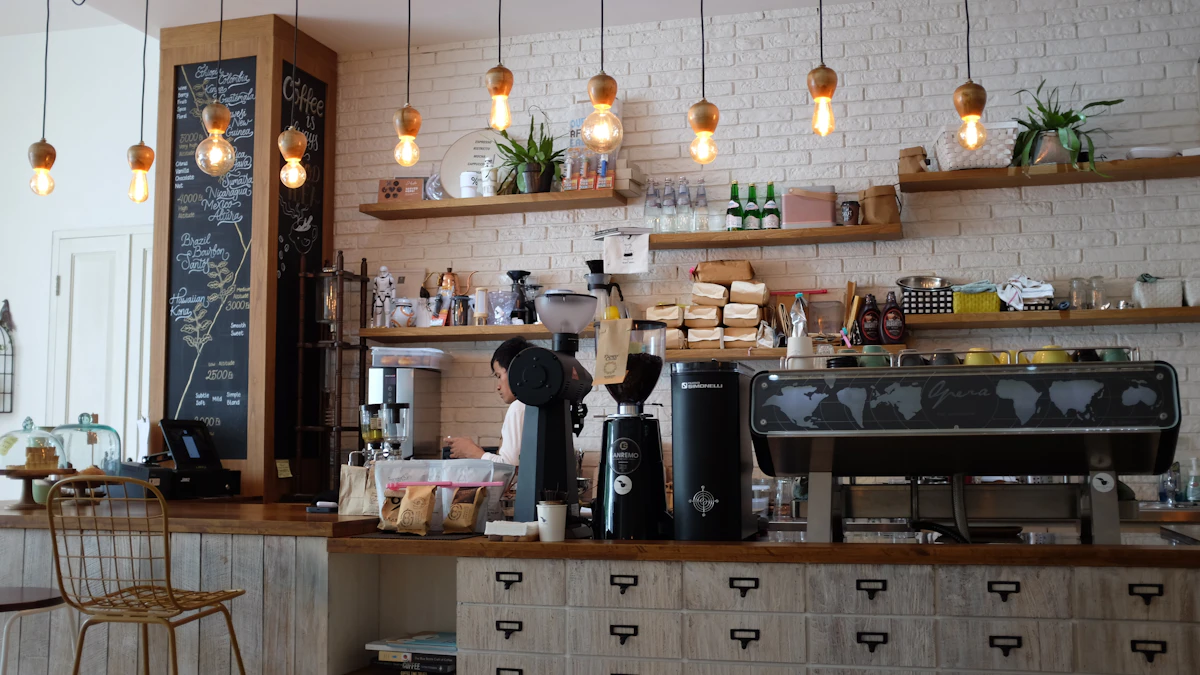
Hero photograph caption: Specialty buyers in 2026 are paying for the craft stack, beans, kit, baristas, wholesale, not just the trading line.
- Specialty coffee businesses command higher exit multipliers of 2.0x to 3.5x SDE compared to standard independent cafes.
- Buyers heavily scrutinise your physical asset value, prioritising documented ownership of tier-one equipment like La Marzocco, Synesso, and Mahlkönig.
- In-house roasting operations and secured wholesale accounts represent the largest levers for increasing your final sale price.
- Navigating 2026 macro conditions requires clear operational responses to the tapered 40% business rates relief and the new £12.21 National Living Wage.
Selling a UK Specialty Coffee Shop in 2026: What You Need to Know
Selling a specialty coffee shop in 2026 comes down to the quality of your equipment, the strength of your wholesale income, and your ability to show a buyer a profitable, settled business. Many owners of third-wave coffee shops eventually reach a point where they are ready for a change of pace. You might be feeling exhausted from years of early morning starts, dealing with a change in your personal circumstances, hoping to retire, or simply looking to release the capital you have spent years building up. Whatever your reason for selling, stepping away from a business you have poured your heart into is a significant decision. If you have never sold a business before, the process can feel overwhelming, but preparing properly will make a successful sale far more likely.
To find the right buyer, you need to understand exactly what they are looking for and what they are worried about. The UK hospitality sector is currently going through a period of significant change. Buyers are actively looking for established specialty coffee shops, but they are cautious with their money. From April 2025, business rates relief tapers down to 40 percent, which directly impacts your fixed costs. At the same time, the National Living Wage has increased to £12.21 for staff over the age of 21, and the employer National Insurance threshold has dropped sharply to £5,000. On top of this, many operators are dealing with energy contracts renewing at higher modern rates.
Buyers are fully aware of these rising costs. When they look at your business, they will calculate how these new expenses will affect the profits. If you want to achieve a good sale price, you need to show them that your business is strong enough to handle these changes. You must demonstrate that you have a loyal customer base willing to pay premium prices, efficient staff rotas, and ideally, extra income streams that do not rely purely on how many people walk through the front door on a rainy Tuesday.
Why Buyers Value Specialty Coffee Differently
A standard high street cafe is often valued quite cautiously because it relies entirely on local footfall and passing trade. A specialty coffee shop is viewed differently. Buyers tend to look at an established specialty operation as a ready-made engine. They are not just buying a place that pours flat whites; they are buying your carefully chosen equipment, your local reputation, and your supply chains.
The people buying these businesses are rarely early retirees looking for a quiet tea room. Instead, you are likely to be approached by ambitious local entrepreneurs, existing hospitality managers looking for their first site, or regional coffee roasters who want to buy a ready-made high street shop to sell their own beans directly to the public. These buyers are financially sensible. They will respect a business that has tidy accounts, high-quality assets, and a clear daily routine.
Your Equipment is Your Biggest Tangible Asset
In a standard cafe, the physical equipment loses its value quickly. In the specialty coffee sector, high-end equipment holds its value remarkably well and acts as a major selling point. When a serious buyer walks into your shop, the first thing they will look at is the espresso machine sitting on your counter. Having a respected machine like a La Marzocco Linea PB, a La Marzocco KB90 with straight-in portafilters, a Synesso MVP, or a sleek under-counter Modbar system instantly tells the buyer that you run a serious operation.
The supporting equipment is equally important. Buyers expect to see industry standard grinders, such as the Mahlkönig E80 or EK43, which guarantee consistency during busy rushes. They will look for a Marco Uber boiler system for precise filter brewing, dedicated reverse osmosis water filtration systems, and well-maintained refrigeration. This collection of equipment is incredibly expensive to buy from new today.
Crucially, you need to prove that you actually own this equipment outright. If your espresso machine is leased, a buyer simply sees that as a monthly debt they have to take over. If you own the equipment fully, it adds genuine value to your asking price. You also need to find all your servicing records. A buyer will view an unserviced La Marzocco as a costly repair waiting to happen, whereas a fully documented, regularly serviced machine provides total peace of mind.
Ready to see what your specialty coffee business is really worth? Stop guessing and start planning. Use our Expert Valuation Tool to get an accurate, data-driven assessment based on current 2026 market figures.
The Hidden Value of In-House Roasting
If your shop roasts its own coffee, you are no longer just running a retail cafe; you are running a small manufacturing business. Roasting equipment adds significant value, provided it is set up legally and safely. Buyers are highly attracted to established 5kg machines from respected brands like Probat, Giesen, or highly energy-efficient Loring smart roasters.
However, having the roaster is only half the story. The paperwork is just as important. You must be able to prove that you have total council compliance. This means having the correct planning permissions, documented afterburner compliance, strict adherence to local emissions regulations, and complete servicing logs. A buyer will walk away from a deal immediately if they suspect the local authority might knock on the door and shut the roaster down due to noise or smell complaints.
Wholesale Accounts: The Ultimate Income Stream
Alongside roasting comes the opportunity to supply other businesses. If you supply your signature house blend to four local restaurants, an independent hotel, and two corporate offices, you have a wholesale book. This is incredibly valuable. Wholesale accounts generate predictable, repeating income that arrives every month, regardless of whether the high street is busy or quiet.
The mistake many owners make is relying on friendly handshake agreements. A gentleman's agreement with a local restaurant owner means absolutely nothing to a buyer. During the formal checking process before a sale, a buyer will want to see everything on paper. You need to convert those informal arrangements into documented supply contracts. Even a simple contract with a thirty-day cancellation notice proves to the buyer that this is real, verifiable commercial income. Securing this income is one of the easiest ways to justify a higher asking price.
Brand Reputation, Customers, and Your Team
In the independent coffee sector, your local reputation directly affects your daily takings. A buyer is highly motivated to acquire a business that is already loved by the community, because building that kind of trust from scratch takes years. They will look at your digital presence, your customer reviews, and your engagement on social media platforms like Instagram. A recognised visual identity and collaborations with local artisan bakeries elevate your shop from a standard cafe to a local destination.
Your staff are just as important as your customers. If a business relies entirely on you working sixty hours a week, it is very difficult to sell. Buyers want to know that the business will not fall apart the moment you hand over the keys. If you act as the main barista, the head roaster, the bookkeeper, and the cleaner, you have created a job for yourself rather than a sellable business. Before you go to market, you should spend time training a lead barista or a manager to handle the daily operations. Document your daily routines and roasting profiles. The less the business needs you to survive, the more a buyer will be willing to pay for it.
Understanding the Buyer's Checks: Due Diligence
When a buyer makes an offer and you accept it, the sale does not happen overnight. The buyer and their solicitor will begin a process called due diligence. This is simply a period of legal and financial checking to ensure the business is exactly as you described it. Many inexperienced sellers find this part of the process frustrating, but it is completely normal and happens in every single business sale.
The buyer's solicitor will ask you for a large amount of paperwork. They will want to see your commercial lease, staff employment contracts, fire risk assessments, electrical safety certificates, asbestos reports, and pest control records. They will also look deeply into your accounts for the last two to three years. If you wait until a buyer asks for these documents before you start looking for them, you will cause long delays and the buyer might lose confidence. The best thing you can do is gather all this paperwork into a single folder months before you even put the business on the market.
Getting Your Commercial Lease in Order
Your commercial lease is the foundation of your business. Without a secure premises, you have nothing to sell. When you sell a coffee shop, you usually transfer your existing lease to the buyer through a process called a lease assignment. Buyers generally want to see at least three to five years remaining on the current lease. If you only have a few months left, a buyer will not risk spending their money because the landlord could simply ask them to leave or double the rent.
You should review your lease early and understand the terms for assigning it to a new owner. Commercial landlords are famously slow to respond and they can delay a sale by months if they are not managed properly. Sometimes, they will ask the incoming buyer to provide a rent deposit or a personal guarantee. Knowing what your landlord expects before you find a buyer will save you a huge amount of stress later down the line.
Real Example: Selling a Specialty Coffee Shop in Bristol
To show you how these preparation steps work in reality, let us look at an anonymised example of a specialty coffee shop in Bristol that recently went through the sale process. The owner had run the business successfully for five years but wanted a change in lifestyle and a break from the hospitality industry. He wanted to get the business ready for a sale in the 2026 market.
The shop was well equipped. It featured a fully owned La Marzocco Linea PB, two Mahlkönig E80 grinders, and a 5kg Giesen roaster sitting in a properly ventilated outbuilding. As well as serving retail customers, the owner had spent time building relationships with four boutique hotels in the local area, supplying them with freshly roasted coffee every week.
However, the business had one major flaw. The owner did almost everything himself, including all the coffee roasting. If he sold the business and walked away, the buyer would have no one to roast the coffee. To fix this, he spent six months writing down his exact roasting recipes and training his most reliable barista to take over the roasting schedule. He gradually reduced his own hours until he was only working in the business two days a week.
He also tackled the wholesale income. His hotel clients were used to ordering coffee via informal text messages. He sat down with each hotel manager and politely asked them to sign a simple twelve-month rolling supply agreement. All four agreed. This simple piece of paperwork guaranteed the business £42,000 a year in wholesale revenue, which looked fantastic to potential buyers. After getting his accounts in order, he proved that his Seller's Discretionary Earnings (the true financial benefit to a working owner) sat at £69,300.
Because he had prepared so thoroughly, the business attracted immediate attention from an expanding regional coffee brand looking for a flagship site. The table below details exactly how he prepared, the challenges he faced, and the final result of the sale.
| Preparation Phase | Action Taken by Owner | Challenges Faced During Sale | Final Financial Outcome |
|---|---|---|---|
| Reviewing the Assets | Gathered all service logs for the Giesen roaster and La Marzocco PB. Paid off the final £2,000 owed on the grinder lease. | Providing the buyer with absolute proof of afterburner compliance for the local council. | Added solid value to the asking price. All machinery was evaluated at £38,000 fair market value. |
| Securing the Income | Transitioned four informal hotel supply deals into documented 12-month rolling contracts. | The hotel clients initially resisted signing formal paperwork just for coffee supply. | Secured £42,000 per annum in guaranteed wholesale revenue outside of normal daily retail sales. |
| Stepping Back | Trained the lead barista to manage the roasting profiles. Owner stepped back to just 2 days a week. | Maintaining the exact quality of the coffee roast during the staff transition period. | Proved the business was not heavily reliant on the owner, giving the buyer total confidence. |
| Final Valuation & Sale | Calculated Seller's Discretionary Earnings (SDE) at £69,300. Went to market targeting regional coffee operators. | Proving to the buyer that the profits were safe despite the new £12.21 wage legislation. | Sold to a regional roastery for £215,000 (representing a 3.1x SDE multiple). |
The owner in Bristol achieved a fantastic sale price because he removed the risk for the buyer. He proved the equipment was compliant, secured his wholesale income on paper, and presented a ready-to-run business rather than just a busy high street unit.
How Much is Your Specialty Coffee Shop Worth?
Valuing a small business is a practical process, not a guessing game. When calculating the value of an independent hospitality business, brokers and buyers usually look at a figure called Seller's Discretionary Earnings (often shortened to SDE). In plain English, SDE is your true net profit, plus the salary you pay yourself as the working owner, plus any personal or one-off expenses you have put through the business accounts (like a personal car lease or a one-off equipment repair).
For example, if your shop makes £20,000 in declared net profit, you pay yourself a salary of £35,000, and you put £5,000 of personal vehicle costs through the business, your true SDE is £60,000. This number is vital because it shows a buyer exactly how much cash they could expect to generate if they bought the business and ran it themselves.
Once you have this SDE figure, a multiple is applied to it. Standard independent cafes usually sell for between 1.5x and 2.5x their SDE. Specialty coffee businesses, however, frequently achieve between 2.0x and 3.5x their SDE. This difference in value is entirely down to the quality of the assets, the loyalty of the customers, and the extra income streams from wholesale or roasting.
A business that relies entirely on high street footfall, has a short lease, and depends completely on the owner working full time will sit at the lower end of the 2.0x range. On the other hand, a highly organised business with a strong wholesale book, fully owned premium equipment, an excellent local reputation, and a secure lease will confidently push toward the 3.5x mark.
It is incredibly important to have realistic expectations. Finding the right buyer, answering their solicitor's questions, dealing with the landlord, and completing the sale takes time. A typical business sale can easily take anywhere from six to twelve months from the day you list it to the day the money hits your bank account. Also, not every sale completes. Buyers can change their minds, or landlords can refuse to assign leases. Being honest about these realities is the best way to prepare yourself for the process.
Managing Your Staff During a Sale
One of the most common questions owners ask is when they should tell their staff about the sale. The simple answer is that confidentiality is vital. You should avoid telling your staff you are selling the business until the deal is legally binding and certain to happen. If you tell your staff too early, they may panic about their job security and look for work elsewhere. Losing your best barista or your store manager in the middle of a sale process can severely damage the confidence of your buyer and even cause the deal to collapse.
When the time is right to tell them, reassure them that their employment rights are protected by law. Under UK regulations (known as TUPE), an incoming buyer must take on the existing staff under their current terms and conditions. A good buyer will want to keep your staff, as experienced employees are exactly what makes an established business so valuable.
Take the Next Step Towards a Successful Exit
Selling a premium coffee operation takes time, careful preparation, and access to a network of serious buyers who actually understand the industry. You have built a specific, highly respected business, and it deserves to be represented properly to the right people. At BuyMyCafe.co.uk, we are specialist brokers who understand the true value of third-wave coffee equipment, wholesale economics, and independent community brands.
Whether you are actively planning to sell your business this year, or you are simply curious about what it might be worth so you can plan for the future, we are always happy to have a confidential chat. You can get in touch to discuss your situation, explore our expert selling guides, or use our tools to calculate your current value. Preparing early is the single best decision you can make to ensure the business you have worked so hard to build achieves the result it deserves.
Frequently asked questions
Common UK buyer questions on this topic.
Related guides
Hand-picked pillar reads on adjacent topics and sectors.


Explore related sectors
Sector deep-dives covering valuation multiples, buyer demand and listings.